Limited Visibility
Difficulty monitoring performance across departments, facilities, and services.

Click to Call +1 (888) 768-4846 (USA & Canada)
 +44 800 342 3556 (UK)
We help healthcare organizations integrate clinical, operational, and financial data into powerful Power BI dashboards that provide real-time visibility into performance, patient care, and resource utilization.
Book a Free Healthcare Power BI Consultation Now!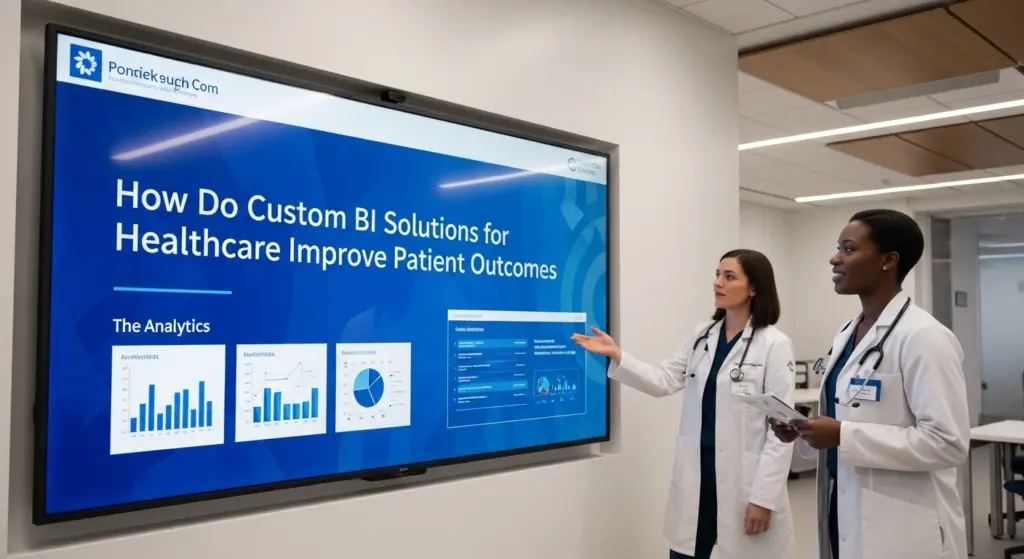
📈 Operational Performance Monitoring
Track performance across departments, services, and facilities in real time.
👥 Patient Flow & Utilization Analysis
Monitor patient admissions, discharge rates, and bed utilization.
📊 Clinical & Quality Analytics
Track patient outcomes and quality-of-care indicators.
💰 Financial & Cost Analysis
Analyze revenue, costs, and profitability across services and departments.



Review EHR systems, billing systems, and operational data sources.
Combine clinical, operational, and financial data into a unified model.
Build dashboards for patient care, operations, and financial performance.
Enable automated reporting and real-time data refresh.
Enable healthcare teams to use dashboards effectively for ongoing monitoring and decision-making.
Real-Time Operational Visibility
Clear insights across departments and facilities
Improved Resource Utilization
Better management of staff, beds, and equipment
Faster Decision-Making
Access to accurate and timely data
Data-Driven Healthcare Management
Support improved patient outcomes and operational efficiency
• Hospital administrators
• Healthcare executives
• Operations managers
• Clinical leaders
• Finance teams
• Healthcare analysts
Yes, Power BI can connect to most healthcare systems including EHR/EMR platforms, billing systems, and operational databases to create unified dashboards.
You can track key metrics such as patient volume, bed occupancy rate, average length of stay, readmission rates, patient wait times, staff utilization, and cost per patient. These are just examples — Power BI can track virtually any KPI as long as the underlying data is available and properly structured.
Yes, dashboards can monitor admissions, discharges, transfers, and bottlenecks to optimize patient flow and reduce delays.
Yes, Power BI can provide real-time visibility into bed occupancy, ICU capacity, and departmental utilization.
Yes, dashboards can track clinical KPIs such as readmission rates, infection rates, and treatment outcomes to support quality improvement.
Yes, by analyzing patient flow and operational data, dashboards can identify delays and inefficiencies that impact wait times.
Yes, you can monitor revenue per patient, cost per case, departmental profitability, and overall financial performance.
Yes, Power BI can help generate accurate, consistent reports required for healthcare compliance and regulatory standards.
Power BI supports enterprise-grade security, including role-based access control and data protection measures to safeguard sensitive healthcare data.
Yes, dashboards can be tailored to provide role-specific insights for clinical staff, operations teams, and leadership.
Yes, it can consolidate data across hospitals, clinics, and departments into a single centralized reporting system.
Most implementations take a few weeks depending on data sources, system integrations, and reporting requirements.
Yes, dashboards can highlight bottlenecks in patient flow, staffing, and resource utilization to support continuous improvement.
30-minute strategy session. No obligation. Clear next steps.
Discover how Power BI dashboards can help your healthcare organization improve visibility, optimize operations, and support better patient outcomes.
30-minute strategy session. No obligation. Clear next steps.