










Power BI custom connector development has become an essential solution for organizations that need to overcome data isolation and create more connected analytics environments. As businesses rely on diverse applications, proprietary systems, and specialized platforms, standard integration options may not always provide the flexibility required for complete data accessibility. Custom connector solutions help establish reliable connections, automate data movement, and support more efficient reporting workflows. This article explores how custom connector development improves integration strategies, enhances performance, and enables organizations to build scalable business intelligence environments.
Power BI Custom Connector Development as a Bridge Between Isolated Data Sources
Power BI Custom Connector Development plays an important role in connecting isolated data environments by allowing organizations to bring information from different systems into a unified analytics ecosystem. As businesses increasingly depend on multiple digital platforms, applications, and specialized tools, data often becomes separated across departments, which can limit visibility and slow down decision-making processes. Therefore, custom connectors provide a structured method for integrating sources that may not be supported by standard connection options, creating a smoother flow of information between business applications and reporting platforms.
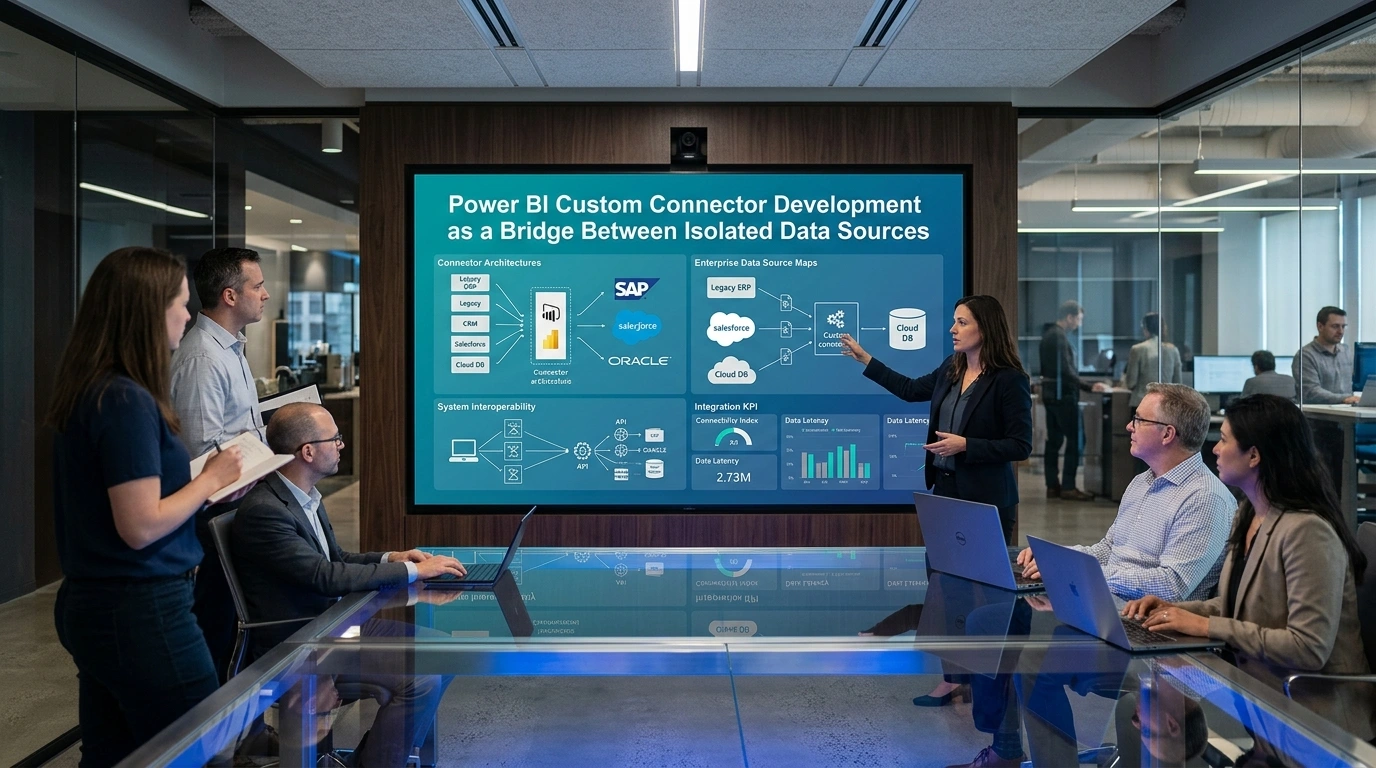
Additionally, these connectors help organizations maintain consistency by enabling automated data retrieval rather than relying on fragmented manual exports that may introduce errors or delays. Furthermore, many enterprises use unique operational systems, industry-specific software, or internally developed applications that require more flexible integration approaches. In this context, Power BI Custom Connector Development enables companies to design connections aligned with their technical environments while supporting secure and reliable access to important datasets. As a result, teams can analyze information from customer platforms, financial systems, operational databases, and other sources within a centralized reporting structure.
Custom connector solutions also support broader data strategies by improving collaboration between departments that previously worked with separate information sources. Consequently, the ability to connect diverse sources contributes to stronger business intelligence practices because employees gain access to more complete and accurate information. Meanwhile, well-developed connectors consider authentication methods, performance requirements, and long-term maintainability, which supports stable data operations. Ultimately, custom connector development serves as a bridge between disconnected technologies by transforming isolated information into accessible insights that support analysis, reporting, and strategic planning across modern organizations.
Why Native Connectors Do Not Always Meet Business Requirements
Native connectors provide a convenient way for organizations to connect common applications and databases with analytics platforms, but they do not always cover every business scenario. Although built-in options can support many widely used services, companies frequently depend on specialized systems, private applications, or customized workflows that require more advanced integration capabilities. Therefore, Power BI Custom Connector Development becomes valuable when standard connectors cannot fully address specific data access requirements or operational structures.
Additionally, businesses often encounter limitations when native connectors lack support for certain authentication models, custom API structures, advanced query handling, or unique data formats. In many cases, organizations may have access to valuable information but face challenges transferring it efficiently into reporting environments. Consequently, custom connectors help close these gaps by creating tailored communication pathways between Power BI and the systems that contain essential business data.
Modern organizations rarely operate with identical technology stacks, which means a single standard connector approach may not satisfy all technical needs. As a result, custom development allows different environments, including cloud applications, internal databases, legacy platforms, and vendor-specific tools, to work together more effectively while reducing dependency on repetitive manual processes. Similarly, customized connectivity supports stronger governance because organizations can define how information is collected, processed, and delivered for analysis. Ultimately, custom connector development expands the possibilities of business intelligence by supporting complex environments where standard options are not enough, while native connectors continue to provide value for common integration scenarios.
Connecting Proprietary Platforms Without Manual Workarounds
Proprietary platforms often contain valuable business information, yet connecting these systems to analytics environments can become challenging when traditional integration options are unavailable. Since many organizations develop private applications or use specialized industry platforms, standard connectors may not recognize their structures or communication methods. Therefore, Power BI Custom Connector Development provides a practical approach for establishing direct connections without depending on manual exports, repeated file transfers, or temporary workarounds.
Additionally, manual processes can create inefficiencies because teams may need to collect, clean, and upload information regularly before generating reports. Over time, these repetitive activities can increase operational effort and introduce inconsistencies between the original data source and analytical results. Consequently, custom connectors allow organizations to create automated pathways that retrieve information directly from proprietary systems while preserving accuracy and improving reporting reliability.
Connecting private platforms often requires consideration of technical factors such as API behavior, authorization requirements, data transformation needs, and performance expectations. In this situation, custom connectors can be designed to reflect the unique characteristics of each platform rather than forcing businesses to adjust their workflows around limited integration methods. Likewise, these integrations help different departments access information without requiring technical teams to repeatedly prepare datasets manually. Ultimately, custom connector development transforms proprietary systems from isolated resources into connected components of a larger business intelligence environment.
How Custom Connectors Improve Data Accessibility Across Teams
Custom connectors improve data accessibility across teams by creating a more connected environment where employees can access relevant information without depending on separated systems or complicated manual procedures. As organizations grow, departments such as finance, sales, operations, and management often rely on different applications that store important data independently. Therefore, Power BI Custom Connector Development helps unify these sources and supports a more collaborative approach to business analysis.
Furthermore, improved accessibility involves collecting data from multiple locations while ensuring that information remains consistent, organized, and available when teams need it. Through customized integrations, organizations can reduce delays caused by manual data requests and allow different departments to work from shared reporting environments. Consequently, this creates better alignment because decisions are based on a broader understanding of business activities rather than isolated departmental views.
Custom connectors also contribute to more efficient analytics workflows by reducing the technical barriers between users and information sources. Instead of requiring employees to understand complex backend systems, organizations can provide structured access through reporting platforms that transform raw information into understandable insights. Meanwhile, businesses gain greater flexibility because new data sources can be connected as technology requirements continue to evolve. Ultimately, custom connectors enhance the value of business intelligence systems by turning scattered information into accessible resources that support teamwork, transparency, and informed decision-making throughout the organization.
Power BI Custom Connector Development and Modern Data Integration Strategies
Power BI Custom Connector Development and modern data integration strategies have become essential components in building connected analytics environments where organizations depend on information distributed across multiple platforms, applications, and services. As companies increasingly adopt cloud technologies and specialized business systems, traditional connection methods may not always provide the flexibility required to access unique or complex data sources. Therefore, custom connectors create a structured bridge between different technologies by allowing controlled and reliable communication with systems that are not always supported by standard integration options.
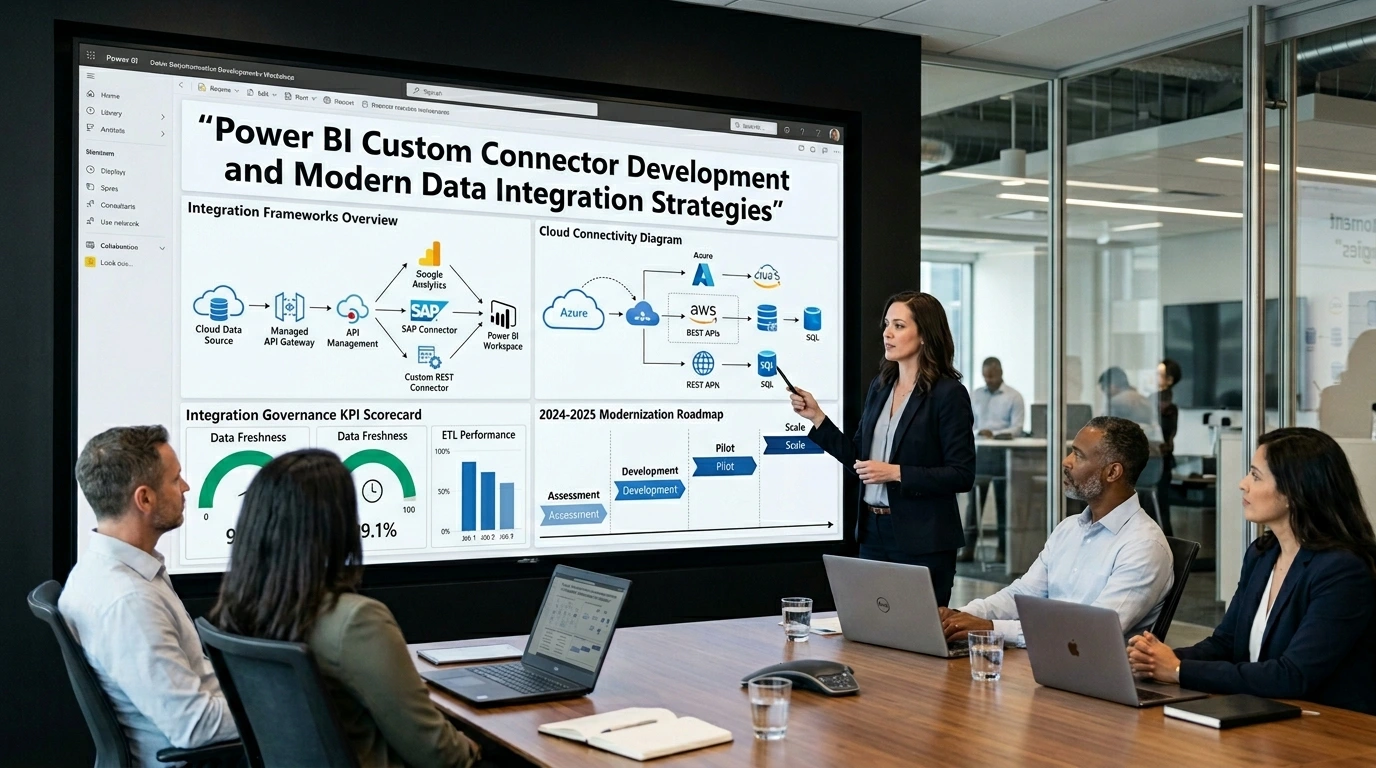
Furthermore, modern integration strategies focus on developing scalable environments where data can move securely and consistently between operational systems and analytical platforms. Power BI Custom Connector Development supports this approach by adapting connectivity processes to specific business needs, including authentication requirements, API structures, and data access models. In addition, these solutions help organizations create a stronger foundation for business intelligence by reducing unnecessary manual processes and improving the availability of accurate information for reporting purposes.
As digital ecosystems continue expanding, custom connector solutions have become closely connected with broader data governance and analytics strategies. Moreover, reliable integration methods help organizations maintain consistency across different departments while supporting future technology growth. Consequently, custom connectors are no longer viewed only as technical connection tools because they represent an important part of a complete data strategy that transforms separated information sources into a connected and valuable analytics environment.
Reducing Data Fragmentation Across Applications and Services
Data fragmentation often occurs when organizations use several applications that store information separately, creating challenges for analysis, reporting accuracy, and operational visibility. Since departments commonly depend on different platforms for sales, finance, customer management, and daily processes, important information can become isolated across the organization. Therefore, Power BI Custom Connector Development helps reduce these barriers by enabling customized connections that allow various systems and services to communicate more effectively with analytics environments.
Additionally, fragmented data structures may result in duplicated information, inconsistent reports, and difficulties when creating a complete view of business performance. Custom connectors address these issues by providing organized access paths that collect information from multiple sources while maintaining the required structure for reporting and analysis. Furthermore, these connections can support private systems, specialized applications, and external platforms where traditional connectors may not provide enough flexibility.
Over time, reducing data fragmentation improves collaboration because teams gain access to more consistent and complete insights instead of depending on disconnected information sources. Similarly, structured integration methods strengthen data governance by creating clearer processes for how information moves between applications. As a result, businesses can create a more unified analytics environment where data accessibility, reporting accuracy, and operational understanding continue to improve.
Supporting Transformation Workflows Before Data Reaches Reports
Data transformation workflows are an important part of modern analytics because information collected from different systems is rarely prepared for immediate reporting. Since applications often organize and store information using different formats and structures, transformation processes help improve consistency before data reaches analytical models. In this context, Power BI Custom Connector Development supports more efficient preparation workflows by helping manage how information is extracted, structured, and transferred from original sources.
Moreover, connector-based transformation processes can help align incoming information with reporting requirements before it becomes part of dashboards or business intelligence solutions. Custom connectors may support specific API responses, unique data formats, and business rules that determine how information should be prepared for analysis. Additionally, handling transformation activities earlier in the data journey can reduce complexity within reports and improve the overall quality of analytical outputs.
As organizations continue working with larger and more diverse information sources, structured transformation workflows become increasingly valuable for maintaining reliable analytics environments. Furthermore, preparing data before it reaches reports allows analysts to focus more on interpretation and business insights rather than repeated correction processes. Consequently, custom connectivity and transformation strategies work together to support cleaner, more dependable, and more scalable reporting ecosystems.
Creating Consistent Data Pipelines for Analytics Consumption
Consistent data pipelines are essential for organizations that require dependable analytics because information must travel from source systems to reporting environments through organized and repeatable processes. As companies manage increasing amounts of digital information, maintaining stable data flows becomes necessary for supporting accurate decision-making. Therefore, Power BI Custom Connector Development contributes to creating reliable pipelines by establishing customized connections between different platforms and analytics tools.
In addition, well-designed pipelines support the complete movement of information from extraction and preparation to final analytical consumption. Custom connectors improve this process by adapting to the technical requirements of various systems and reducing problems caused by disconnected or manual integration methods. Moreover, these structured approaches allow analytics teams to work with information that follows consistent standards across multiple reporting projects.
As business technology environments continue to grow, consistent pipelines provide the flexibility needed to support changing analytical requirements. Likewise, reliable data flows strengthen governance by improving transparency around how information is collected, processed, and delivered. Consequently, connector-based integration strategies help organizations build scalable analytics foundations where reports are supported by organized, accessible, and trustworthy data.
The Role of Automation in Connector-Based Data Operations
Automation plays a major role in connector-based data operations because organizations need efficient methods for managing information movement across increasingly complex digital environments. As the number of applications and data sources grows, manual processes may create delays and increase the possibility of inconsistencies. Therefore, Power BI Custom Connector Development supports automated integration approaches by creating customized communication processes between business systems and reporting platforms.
Furthermore, automated connector operations can improve the efficiency of recurring activities such as data retrieval, system communication, authentication handling, and information updates. These processes allow data workflows to operate with greater consistency while reducing dependency on repetitive manual tasks. Additionally, automation helps organizations maintain structured integration patterns that support both current reporting needs and future expansion.
Over time, automation strengthens the scalability and reliability of modern analytics environments by allowing businesses to manage growing data requirements more effectively. Similarly, automated workflows provide a more stable foundation when organizations introduce new platforms, applications, or services. Consequently, combining automation with custom connector strategies helps create connected data operations that support continuous access to valuable information for analysis and strategic decision-making.
Design Considerations That Influence Connector Reliability and Performance
Design considerations that influence connector reliability and performance represent a fundamental aspect of building stable integration environments where different applications, platforms, and analytical systems exchange information efficiently. Moreover, organizations increasingly depend on well-planned connector architectures because data ecosystems often include cloud services, internal databases, external APIs, and specialized business applications that require continuous communication. As a result, effective planning focuses on creating connectors that remain dependable under changing workloads while maintaining security, scalability, and consistency. In the context of Power BI Custom Connector Development, reliability is strongly connected to how data requests are structured, how authentication processes are managed, and how efficiently information moves between sources and reporting environments.

Furthermore, connector performance depends on several technical and operational factors that work together to reduce failures and improve user experience. For instance, developers and data teams usually evaluate data source complexity, expected growth patterns, security requirements, access control models, API structures, response behavior, transformation requirements, and maintenance needs before establishing long-term integration solutions . Additionally, reliable connector design requires a balance between functionality and resource efficiency because a connector that retrieves information successfully may still create performance issues if it processes unnecessary data or handles requests inefficiently.
Similarly, organizations implementing Power BI Custom Connector Development often consider long-term maintainability because business systems continue evolving through new APIs, security policies, and data requirements. Consequently, connectors are commonly designed with flexible structures that allow updates without disrupting reporting workflows. Meanwhile, documentation, monitoring, and validation processes contribute to maintaining predictable behavior over time. Ultimately, thoughtful design decisions create a stronger foundation for analytics operations by ensuring that data remains accessible, accurate, and efficiently delivered to users who rely on business intelligence platforms for decision-making.
Authentication Methods and Secure Data Access Patterns
Authentication methods and secure data access patterns play an essential role in determining how safely and reliably connectors communicate with different information sources. Furthermore, secure authentication frameworks help organizations protect sensitive data while allowing approved users and applications to retrieve the information required for analytics activities. Within modern integration strategies, security functions as a core component of connector architecture that influences both reliability and performance.
Therefore, well-designed authentication approaches contribute to stable connections without creating unnecessary complexity for users. In many enterprise environments, authentication mechanisms vary depending on the connected system, compliance requirements, and the type of data being accessed. For example, common authentication models may include token-based access, identity-based authorization, encrypted credential handling, and controlled permission structures that reduce unnecessary exposure of sensitive information.
As a result, organizations using Power BI Custom Connector Development can create integration solutions that align effectively with internal security policies and external platform requirements. Moreover, secure data access patterns determine how requests are controlled, how sessions are maintained, and how information is protected during transfer. Consequently, connectors that handle authorization changes, expired credentials, and permission updates effectively can provide a more consistent experience while supporting future scalability as new applications and services become part of the data environment.
Managing API Limitations and Response Efficiency
Managing API limitations and response efficiency is a critical consideration when developing connectors that depend on external services or application interfaces for retrieving information. Moreover, APIs often include specific rules regarding request frequency, data volume, authentication duration, and response structures, which means connector performance is directly influenced by how these limitations are handled. As digital environments become more interconnected, efficient communication between systems becomes increasingly important for maintaining reliable analytics workflows.
Additionally, different platforms apply restrictions such as rate limits, pagination requirements, timeout rules, and maximum response sizes to protect their infrastructure. Consequently, connectors must operate within these boundaries while continuing to provide accurate and timely information. In the field of Power BI Custom Connector Development, effective API management helps prevent incomplete data retrieval, connection interruptions, and unnecessary delays that could affect reporting accuracy.
Furthermore, response efficiency depends on designing interactions that retrieve relevant information without overloading either the source system or the reporting environment. Similarly, structured approaches such as handling paginated responses, reducing repeated API calls, managing temporary failures, and processing returned data efficiently can improve performance. Ultimately, careful management of API limitations creates more dependable integration workflows by improving speed, stability, and consistency throughout the data connection process.
Performance Optimization Techniques for Large Data Volumes
Performance optimization techniques for large data volumes are essential for maintaining efficient connector operations as organizations collect and analyze increasingly complex information. Moreover, growing datasets can place significant pressure on integration systems when connectors retrieve, transform, and transfer large amounts of data between platforms. Therefore, optimization strategies focus on improving speed, reducing unnecessary processing, and ensuring that analytics environments receive information in a structured and manageable way.
In modern data environments, performance challenges often appear when connectors process millions of records, combine multiple sources, or support frequent reporting updates. As a result, efficient connector architecture considers how data should be filtered, requested, transformed, and delivered before reaching analytical tools. Within Power BI Custom Connector Development, optimization techniques help create smoother reporting experiences by improving the interaction between source systems and visualization platforms.
Furthermore, performance improvements are closely related to resource management because inefficient connectors can increase network usage, slow reporting processes, and create additional pressure on source applications. Consequently, optimized connectors are often designed to handle growth by supporting changing data volumes without requiring complete redevelopment. Similarly, caching strategies, incremental updates, and organized transformation workflows can contribute to more predictable performance while supporting future business intelligence requirements.
Testing and Validation Throughout the Development Lifecycle
Testing and validation throughout the development lifecycle represent important practices for ensuring that connectors remain reliable, accurate, and suitable for real-world business environments. Furthermore, connector development involves multiple stages where functionality, security, performance, and compatibility must be evaluated before integration solutions become part of daily operations. As a result, continuous validation helps identify potential issues early and supports long-term system stability.
During connector creation, testing activities commonly examine how effectively the connector communicates with data sources, processes requests, handles errors, and responds to different usage scenarios. Moreover, organizations applying Power BI Custom Connector Development often evaluate connectors across different environments to confirm that data retrieval and transformation processes remain consistent. Consequently, testing becomes a continuous quality process that supports reliability throughout deployment, maintenance, and future development activities.
Meanwhile, lifecycle testing becomes increasingly important as connected platforms continue to change through software updates, API modifications, and evolving security requirements. Therefore, regular evaluations help maintain compatibility and reduce the risk of unexpected failures. Similarly, structured testing processes provide better visibility into connector performance under realistic conditions. Ultimately, testing and validation create a stronger foundation for sustainable connector operations by combining technical reliability, security assurance, and performance consistency throughout the entire development lifecycle.
When Organizations Benefit Most from Custom Connector Services
Custom connector services provide the greatest value when organizations depend on complex data environments where standard integrations no longer provide enough flexibility, reliability, or coverage. Moreover, modern companies often operate across multiple applications, cloud services, internal databases, and proprietary systems that require a more adaptable method for connecting information. As business operations expand, the need for accurate and automated data movement becomes increasingly important because fragmented information can slow reporting processes and limit visibility across departments.

Many organizations experience greater benefits from custom connector services when analytics teams spend excessive time managing exports, correcting inconsistent datasets, or creating temporary solutions to access important information. Furthermore, tailored connectors can support unique data structures, security requirements, and operational workflows that traditional integration options may not fully address. Consequently, businesses gain a more consistent connection between their data sources and reporting platforms, allowing information to flow through controlled and repeatable processes.
Over time, organizations that rely on specialized systems often recognize that custom development provides value beyond simple connectivity. Additionally, custom connector services can support stronger data governance, improved reporting accuracy, and better scalability as business requirements continue to change. Therefore, these solutions are commonly adopted when companies need long-term integration strategies that align with their technology environment rather than depending on limited standard options.
Indicators That Standard Integrations Have Reached Their Limits
Standard integrations usually reach their limitations when existing connectors cannot support the level of customization, performance, or control required by growing organizations. For instance, teams may begin noticing frequent reporting delays, incomplete data transfers, missing fields, or compatibility challenges between different platforms. As a result, these challenges often indicate that the current integration approach is no longer capable of supporting advanced analytical needs effectively.
Organizations may also experience difficulties when native connectors cannot manage complex authentication processes, API restrictions, large data volumes, or customized business logic. Similarly, manual adjustments and repeated data preparation activities can become signs that existing tools are creating operational inefficiencies rather than solving them. Consequently, custom connector services become a practical approach for establishing more dependable connections that reflect specific technical and business requirements.
As data ecosystems become more advanced, limited integrations can affect collaboration between departments and reduce confidence in reporting outcomes. Moreover, businesses often require connectors that can adapt to changing applications, evolving data models, and increasing automation demands. Therefore, recognizing these limitations helps organizations understand when a customized integration framework offers greater long-term stability and reporting effectiveness.
Supporting Industry-Specific Systems and Specialized Data Sources
Industry-specific systems frequently contain essential operational information that cannot always be accessed effectively through general integration solutions. Moreover, sectors such as healthcare, finance, logistics, manufacturing, and specialized service industries often depend on platforms with unique structures, permissions, and data exchange methods. Because of this complexity, organizations may require custom connector services to create reliable communication between these systems and their analytics environments.
Specialized data sources often include custom fields, advanced workflows, and industry-focused processes that standard connectors may not interpret correctly. In these situations, tailored connectors can preserve important relationships between datasets while supporting accurate transformation and organization of information. Consequently, companies can maintain existing systems while improving accessibility for reporting teams and decision-makers.
Over the long term, connecting specialized platforms through customized solutions allows organizations to create a more complete view of their operations. Additionally, these connectors help reduce information gaps by allowing different systems to contribute valuable insights within a unified reporting structure. Therefore, businesses that rely on unique technologies can achieve stronger analytical capabilities without replacing important industry-specific applications.
Balancing Development Costs with Long-Term Reporting Value
Custom connector development requires careful evaluation because organizations usually compare the initial investment with the long-term improvements created through better data access and automation. However, the overall value becomes clearer when businesses consider the time saved from reducing repetitive tasks, manual exports, and ongoing reporting corrections. As a result, custom connector services often provide measurable benefits when they replace inefficient processes with reliable automated connections.
The financial impact of customized integration is also connected to factors such as data importance, reporting frequency, operational complexity, and future scalability requirements. While development costs may vary depending on technical needs, a properly designed connector can continue delivering value as systems expand and business requirements evolve. Consequently, organizations often view these solutions as strategic investments rather than short-term technical expenses.
In the long run, effective connectors contribute to stronger reporting environments by improving consistency, reducing errors, and supporting better decisions based on accurate information. Furthermore, custom connector services can become part of a broader data strategy that improves collaboration between technology teams and business users. Therefore, balancing cost with long-term value depends on understanding how improved integration contributes to efficiency, growth, and sustainable analytics performance.
From Custom Data Connections to a More Scalable BI Environment
Custom data connections have become an important foundation for building a more scalable business intelligence environment because organizations increasingly depend on multiple applications, platforms, and data sources that need to operate together efficiently. Moreover, expanding data ecosystems create challenges for traditional connection methods when businesses require consistent access to specialized systems, private applications, or industry-specific information sources. Therefore, Power BI Custom Connector Development supports the creation of structured connectivity solutions that allow organizations to integrate diverse data environments while maintaining reliability, security, and long-term flexibility.
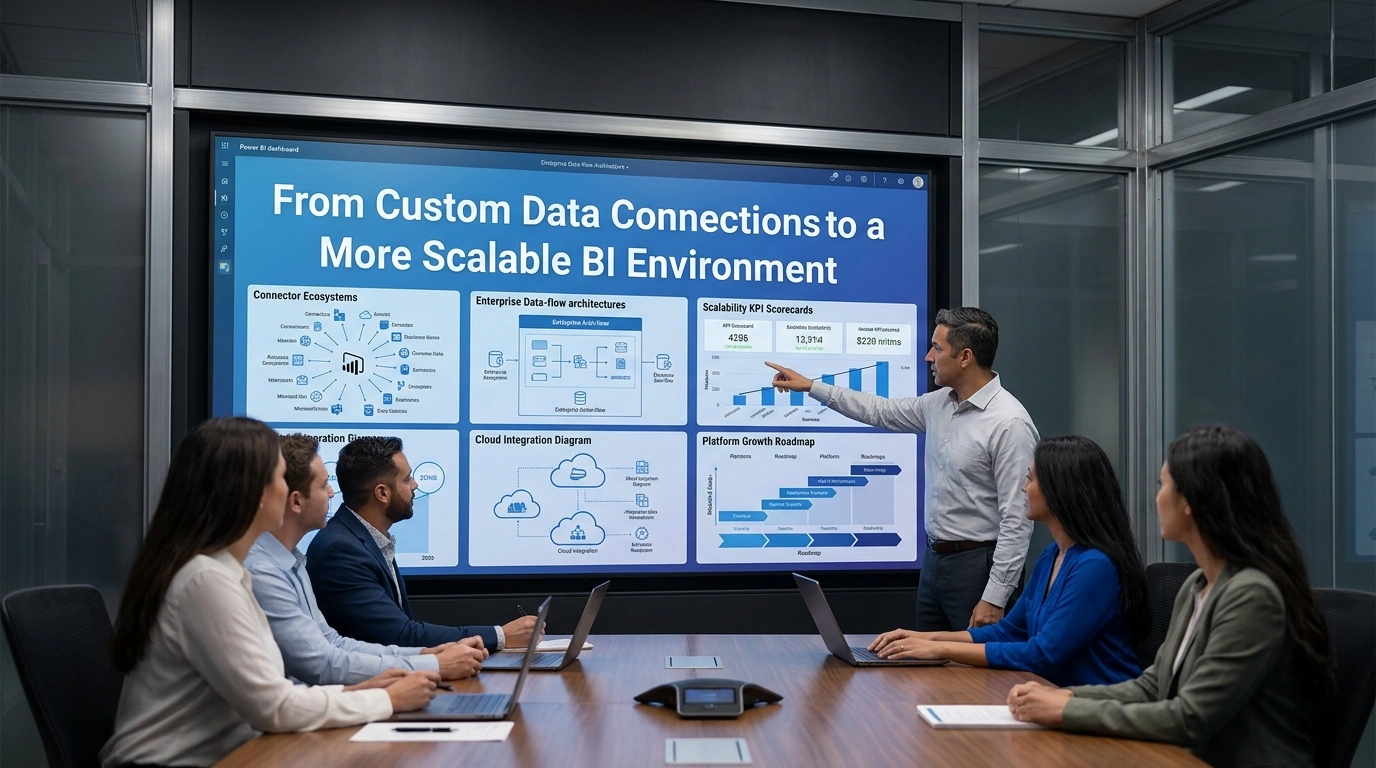
These connectors also help reduce dependence on temporary integration methods by creating reusable pathways that can support analytics operations across different departments and reporting scenarios. Modern BI environments often require scalable architectures that can adapt to increasing data complexity, and consequently, custom connectors contribute to a more organized flow of information between source systems and reporting platforms. Furthermore, organizations benefit from this approach because customized connectivity layers can standardize how data is collected, transformed, and delivered for analysis.
Companies can establish stronger foundations for analytics growth without rebuilding integration processes every time new requirements appear. In addition, Power BI Custom Connector Development can align technical connectivity needs with broader business intelligence strategies by supporting automation, controlled data access, and efficient reporting workflows. Consequently, custom data connections become more than simple links between systems because they act as important components within a sustainable BI architecture. Ultimately, scalable connectivity helps organizations create environments where reporting solutions can grow naturally with operational changes, technological improvements, and increasing demand for accurate data-driven insights.
Encouraging Reusability Across Reporting and Analytics Projects
Reusability is a major consideration in modern analytics development because organizations frequently create multiple reports, dashboards, and analytical models that depend on similar sources of information. Therefore, custom data connections provide a structured method for reducing duplicated development efforts by allowing common integration logic to be applied across different reporting projects. Furthermore, reusable connectors help maintain consistency because teams access information through standardized processes rather than building separate connections for every individual requirement.
Organizations can improve efficiency while creating a more reliable foundation for long-term business intelligence initiatives. A reusable connectivity approach also supports collaboration between technical teams, analysts, and business users because shared integration components create a common framework for accessing important data. Additionally, when organizations use Power BI Custom Connector Development as part of their BI strategy, they can create connectors designed around repeated business requirements, authentication patterns, and transformation processes.
This approach reduces unnecessary variation between reports and helps maintain a consistent analytical experience across departments. Moreover, the value of reusability becomes more noticeable as organizations expand their analytics programs because every new project can benefit from previously developed integration structures. Therefore, well-designed custom connectors can contribute to stronger data management by creating dependable integration assets that serve multiple use cases over time while allowing organizations to focus more attention on insights instead of repeatedly solving the same technical challenges.
Simplifying Ongoing Maintenance and Future Enhancements
Maintaining business intelligence systems requires continuous attention because data sources, security standards, APIs, and organizational requirements often change over time. Consequently, custom connectors can simplify long-term management by creating a controlled integration layer that separates reporting solutions from frequent changes occurring within source applications. Furthermore, this structure allows technical teams to update connection logic, authentication methods, or data retrieval processes in a more organized way without affecting every individual report separately.
Organizations can improve operational stability while reducing the complexity commonly associated with maintaining large analytics environments. Effective connector design supports future improvements because scalable integration components are typically easier to adjust when business needs evolve. Additionally, Power BI Custom Connector Development provides organizations with the ability to build flexible solutions that consider future modifications rather than only solving immediate connection challenges.
Businesses can adapt to new platforms, expanded datasets, or updated technical standards while preserving the value of existing BI investments. In addition, centralized connector management can support better governance because organizations have clearer visibility into how information moves between systems. Consequently, custom connectors become valuable assets that support continuous enhancement across the analytics lifecycle while helping BI environments remain stable, flexible, and prepared for future technological changes.
Supporting BI Modernization Through Flexible Connectivity
Business intelligence modernization focuses on creating more agile, connected, and scalable analytics environments capable of supporting changing organizational demands. Therefore, flexible connectivity plays a significant role because modern companies often rely on a combination of cloud platforms, legacy systems, third-party applications, and specialized databases. Furthermore, custom connectors help bridge these different environments by enabling smoother communication between systems that may not have native integration options available.
Organizations can modernize their BI strategies without abandoning valuable existing technologies or creating unnecessary operational disruptions. A flexible integration approach supports digital transformation because analytics platforms become more capable of adapting to new business models and technical requirements. Additionally, Power BI Custom Connector Development contributes to modernization efforts by allowing companies to design connectivity solutions that reflect their unique workflows, security requirements, and data structures.
Organizations gain more control over how information is accessed, processed, and prepared for decision-making activities. Moreover, flexible connectors contribute to stronger analytics ecosystems by allowing organizations to combine information from different sources into more complete reporting environments. Therefore, custom connectivity becomes a key element in transforming fragmented data landscapes into unified BI environments that support future innovation, expansion, and changing business intelligence requirements.
Power BI custom connector development provides organizations with a practical approach to transforming disconnected data sources into unified, accessible, and reliable analytics ecosystems. By supporting customized integrations, automation, secure access, and scalable data workflows, custom connectors help businesses reduce limitations caused by fragmented systems and manual processes. As data environments continue to expand, investing in flexible connector solutions allows organizations to strengthen their business intelligence capabilities and maintain a foundation that can adapt to future analytical needs.