
Data Analysis Services for Manufacturing play a transformative role in helping modern industrial organizations convert operational complexity into measurable efficiency and sustained profitability. As production environments generate vast volumes of machine, process, quality, and supply chain data, manufacturers increasingly rely on structured analytics frameworks and Power BI consulting to transform this information into actionable intelligence. By integrating real-time monitoring, predictive modeling, and cross-functional performance tracking, these services create end-to-end visibility across the production lifecycle. The result is more precise decision-making, reduced downtime, optimized resource allocation, and stronger alignment between shop-floor operations and strategic financial objectives.
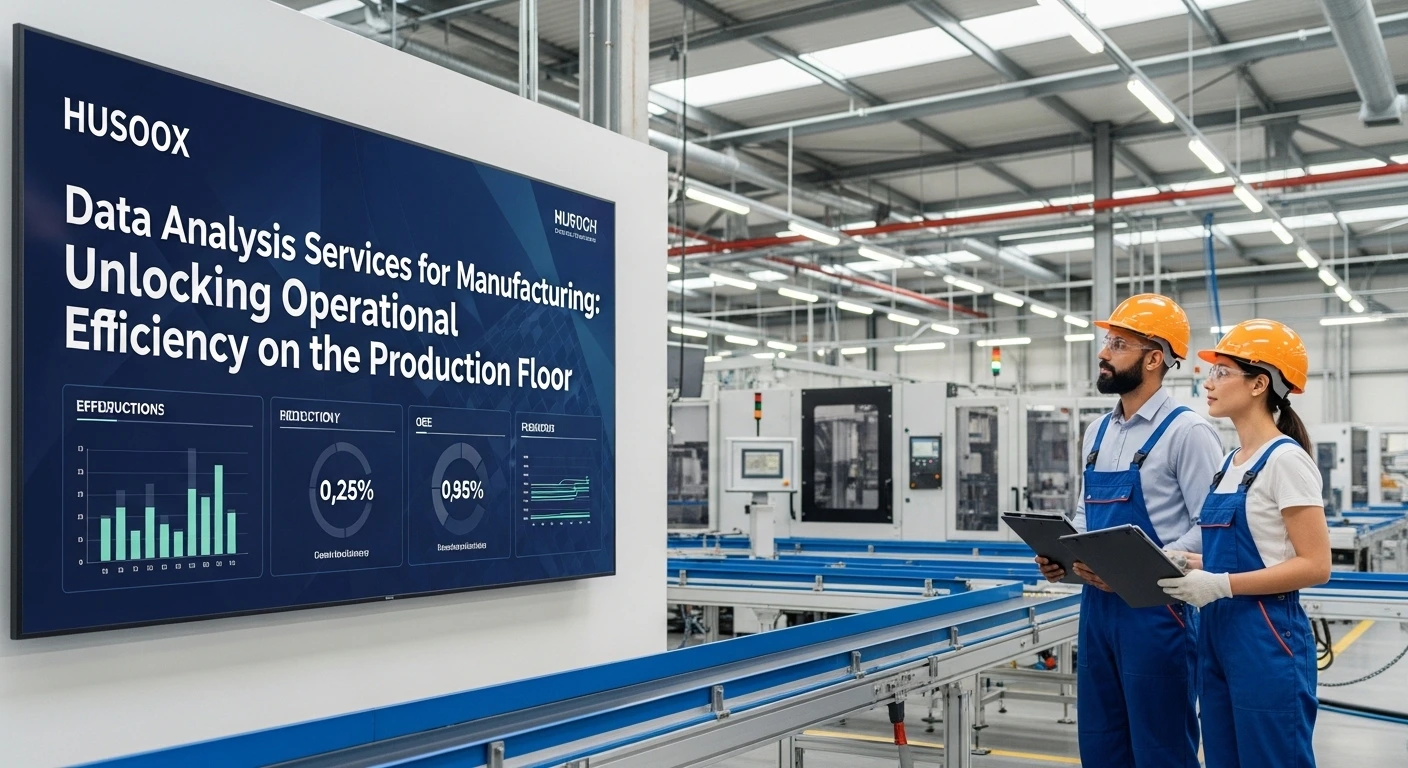
Data Analysis Services for Manufacturing: Unlocking Operational Efficiency on the Production Floor
Data Analysis Services for manufacturing drive measurable performance improvements across complex production environments, as integrated analytics frameworks consolidate machine data, operator inputs, and enterprise resource planning records into a unified intelligence layer. These services enable end-to-end visibility across the production floor through connected dashboards and contextualized metrics, thereby allowing manufacturers to identify bottlenecks, balance workloads, and align throughput with demand forecasts. Structured transformation of raw sensor streams into standardized datasets strengthens decision-making accuracy and consequently reveals inefficiencies in cycle times, material handling processes, and energy consumption patterns.
Granular performance tracking enhances cost control initiatives while simultaneously supporting profitability objectives through data-driven production planning. The integration of advanced analytics into daily operations supports continuous improvement cultures and encourages evidence-based evaluations of downtime events, scrap rates, and labor utilization levels. Shared performance indicators improve cross-department coordination and subsequently reduce misalignment between production, maintenance, and quality management teams. Correlation of machine utilization metrics with maintenance schedules increases return on assets and thereby optimizes capital deployment strategies.
The integration of Industrial Internet of Things technologies with cloud-based analytical platforms advances digital transformation initiatives and consequently enables scalable and secure data environments. Predictive insights derived from Data Analysis Services for manufacturing reinforce competitiveness in volatile markets while aligning operational metrics with broader financial and strategic objectives. Iterative refinement of analytics capabilities sustains long-term efficiency gains and positions manufacturing enterprises to achieve higher productivity, reduced operational risk, and improved profit margins within increasingly data-driven industrial ecosystems.
Real-Time Production Monitoring and Performance Analytics
Real-time dashboards deliver immediate operational transparency by aggregating machine telemetry, programmable logic controller outputs, and shop-floor inputs into synchronized visual interfaces. Continuous detection of deviations in cycle time, throughput, and equipment effectiveness enhances responsiveness to disruptions and thereby reduces reaction latency across supervisory functions. Continuously updated key performance indicators, including Overall Equipment Effectiveness, scrap ratios, and takt time adherence, support structured performance benchmarking across shifts and facilities.
The integration of Data Analysis Services for manufacturing with Manufacturing Execution Systems strengthens operational control by creating a seamless data flow from sensors to executive-level reporting tools. The linkage of operator actions with timestamped performance data improves accountability across production teams and clarifies the root causes of inefficiencies and performance deviations. Trend visualization tools enable proactive adjustments to staffing and scheduling and thereby prevent minor slowdowns from escalating into substantial production losses.
Automated validation and anomaly detection algorithms increase data reliability while minimizing manual reporting errors and inconsistencies. Historical performance modeling facilitates strategic planning and transforms short-term monitoring activities into structured capacity optimization initiatives. The ability of Data Analysis Services for manufacturing to translate live production signals into measurable financial performance indicators aligns operational agility with profitability objectives and reinforces the connection between shop-floor visibility and enterprise-level outcomes.
Manufacturing Data Analytics for Process Optimization
Advanced statistical modeling and multivariate analysis improve production consistency by identifying the variables that most significantly influence yield, cycle time, and material consumption rates. Process mining techniques enhance workflow efficiency by reconstructing actual production sequences from event logs and exposing hidden delays and redundant operational steps. Quantification of waste categories such as overproduction, waiting time, and excess inventory supports lean manufacturing initiatives and validates corrective strategies through empirical measurement.
Correlation of labor productivity metrics with machine utilization data strengthens resource allocation decisions and uncovers opportunities to rebalance workloads and reduce overtime expenditures. Simulation models that evaluate temperature, pressure, speed, and feed rate combinations optimize parameter settings and estimate their impact on output quality and throughput stability. The incorporation of Data Analysis Services for manufacturing into continuous improvement frameworks ensures that optimization initiatives remain grounded in validated operational evidence rather than assumption-based adjustments.
Shared analytical platforms enhance cross-functional collaboration by aligning engineering, operations, and finance departments around common performance targets. Data-driven cost modeling increases profitability by linking production variables to margin performance and clarifying the financial implications associated with process modifications. Iterative experimentation supported by Data Analysis Services for manufacturing sustains competitive performance and embeds optimization as an ongoing, evidence-based operational discipline.
Predictive Maintenance Using Industrial Data Insights
Analysis of vibration patterns, temperature variations, acoustic emissions, and lubrication data collected from connected industrial assets reduces unexpected equipment failures. Machine learning models that estimate remaining useful life based on historical breakdown records improve maintenance planning accuracy and shift maintenance strategies from reactive responses to predictive interventions. Correlation of operational stress factors with failure probabilities strengthens asset reliability while identifying components that exhibit abnormal wear trajectories.
Condition-based servicing schedules lower maintenance expenditures by minimizing unnecessary component replacements and labor costs. Forecasting of component demand using Data Analysis Services for manufacturing enhances spare parts inventory management and reduces excess stock levels without increasing operational risk. Early detection of warning indicators associated with critical equipment malfunction supports safety compliance objectives and protects personnel and production infrastructure.
Alignment of predictive alerts with production schedules increases equipment availability and prevents disruptions during peak demand periods. Lifecycle cost analysis supported by Data Analysis Services for manufacturing improves capital planning decisions by clarifying whether repair or replacement strategies provide superior financial outcomes. The integration of predictive insights into enterprise asset management systems strengthens long-term operational resilience and transforms maintenance management into a strategic contributor to efficiency and profitability.
Quality Control Improvement Through Statistical Data Analysis
Application of statistical process control methodologies enhances product consistency by monitoring variation across batches, shifts, and production lines. Root cause analysis supported by regression modeling and correlation studies reduces defect rates by isolating process variables associated with nonconformance. Documentation of traceable quality metrics derived from Data Analysis Services for manufacturing strengthens compliance with industry standards and ensures readiness for regulatory audits.
Real-time anomaly detection systems improve first-pass yield by flagging deviations before they propagate through downstream operations. Visualization of defect trends using control charts and capability indices supports continuous quality improvement initiatives and guides targeted corrective measures. Alignment of production specifications with performance feedback data increases customer satisfaction and refines tolerance ranges to meet evolving market requirements.
Identification of systemic sources of process variability lowers rework and scrap costs while optimizing inspection frequencies according to quantified risk profiles. Integration of supplier quality data into centralized analytics environments through Data Analysis Services for manufacturing extends quality governance beyond internal production boundaries. The linkage of statistical insights with strategic quality objectives strengthens brand credibility and profitability and establishes a data-driven quality culture that directly contributes to operational efficiency and sustained financial performance.
Reducing Downtime with Smart Factory Data Solutions
Consolidation of machine logs, maintenance histories, and operator reports into unified analytical environments minimizes production interruptions. Time-series analysis identifies recurring stoppage patterns and distinguishes between isolated incidents and systemic operational constraints. Correlation of downtime events with environmental conditions, workload fluctuations, and equipment configurations improves root cause diagnostics while clarifying interdependencies among production assets.
Integration of Data Analysis Services for manufacturing with advanced planning systems enhances scheduling reliability by enabling dynamic adjustments based on real-time operational data. Automated alert systems that provide contextualized fault information reduce mean time to repair and accelerate technical response intervals. Simulation of disruption scenarios using historical operational datasets supports resilience strategies and prepares organizations for supply chain variability or demand fluctuations.
Alignment of predictive maintenance insights with comprehensive downtime analytics increases throughput stability and prioritizes high-impact assets for timely intervention. Consolidated downtime cost reporting enabled by Data Analysis Services for manufacturing strengthens executive oversight by quantifying the financial consequences associated with production losses. The integration of smart factory analytics into routine operations improves overall equipment effectiveness and profitability and ensures that downtime reduction initiatives translate into sustained efficiency improvements and competitive performance advantages.
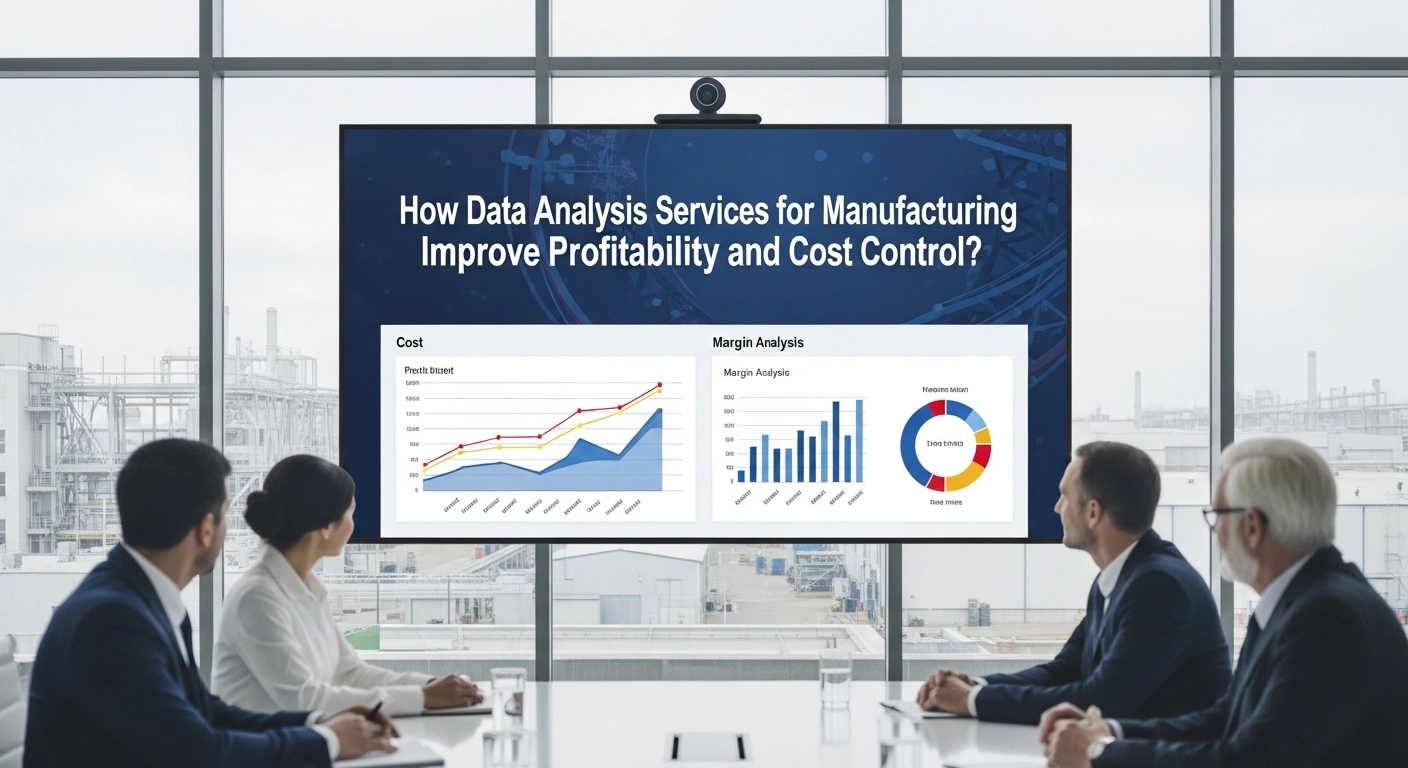
How Data Analysis Services for Manufacturing Improve Profitability and Cost Control?
Organizations leverage integrated data ecosystems to enhance operational transparency and financial oversight, as Data Analysis Services for manufacturing consolidate information from production lines, enterprise systems, and connected equipment into unified analytical environments that reveal inefficiencies affecting profitability. Analysts examine machine performance, downtime frequency, and throughput variability to uncover cost drivers that remain obscured within fragmented systems, and consequently they connect these insights to targeted interventions that reduce waste and improve asset utilization. Furthermore, management teams correlate operational metrics with financial indicators such as cost per unit and margin contribution to clarify how process improvements translate into measurable profit gains, thereby strengthening cost control strategies across departments.
Operational leaders integrate predictive analytics with maintenance and scheduling systems to anticipate equipment failures before disruptions escalate, and thus they lower repair expenses and avoid revenue losses associated with halted production. Quality engineers examine control data alongside process parameters to identify recurring defect patterns, and subsequently they reduce scrap and rework costs that erode margins. In addition, planners align production schedules with real-time demand signals to prevent overproduction and excessive inventory buildup, which in turn preserves working capital and improves cash flow stability.
Executives utilize performance dashboards and automated reporting tools to maintain continuous oversight of operational efficiency, and therefore they support faster evidence-based decision-making at both plant and corporate levels. Supply chain managers connect analytics with procurement and logistics data to reduce unnecessary expenditures linked to delays and emergency sourcing, while simultaneously improving supplier reliability. Organizations reinforce long-term profitability objectives by embedding Data Analysis Services for manufacturing into strategic planning processes, thereby ensuring that operational adjustments contribute to sustainable cost control and consistent financial growth.
Cost Reduction Strategies Through Manufacturing Data Analytics
Operations teams analyze detailed production datasets to identify inefficiencies in labor utilization, machine cycles, and material consumption, as Data Analysis Services for manufacturing provide visibility into activities that generate avoidable costs. Maintenance departments examine logs and sensor readings to predict component wear and schedule service at optimal intervals, and consequently they reduce the financial impact of unplanned downtime and emergency repairs. Financial analysts correlate operational disruptions with measurable losses to quantify the true cost of inefficiencies, thereby strengthening the economic justification for targeted improvements.
Process engineers evaluate variability across shifts, facilities, or product lines to detect inconsistencies that increase material waste and energy usage, and subsequently they standardize best practices that lower per-unit production costs. Procurement specialists integrate supplier performance data to negotiate improved contractual terms and reduce input price volatility, while also minimizing hidden costs associated with unreliable deliveries. Quality managers assess performance metrics in relation to production parameters to reduce defect rates, and therefore they decrease expenditures linked to returns, warranty claims, and customer dissatisfaction.
Management teams monitor cost drivers continuously through analytics dashboards that track energy, labor, and material expenses in real time, and thus they enable timely corrective responses when deviations occur. Decision-makers align cost reduction initiatives with broader operational goals to ensure that savings do not compromise output quality or safety standards. Organizations strengthen long-term financial resilience by embedding Data Analysis Services for manufacturing into continuous improvement frameworks, thereby sustaining incremental cost efficiencies that accumulate into significant profitability gains over time.
Inventory Optimization with Advanced Demand Forecasting
Supply chain analysts leverage historical sales records, seasonal patterns, and market indicators to refine demand projections, as Data Analysis Services for manufacturing transform transactional data into accurate forecasting models that reduce uncertainty. Production planners align manufacturing schedules with forecast outputs to prevent overproduction, and consequently they limit excess stock that increases storage and insurance costs. Procurement teams integrate purchasing timelines with anticipated demand fluctuations to ensure that materials arrive in alignment with manufacturing requirements, thereby reducing idle inventory.
Logistics managers analyze supplier lead times and transportation data to adjust safety stock levels dynamically, and therefore they maintain service continuity without inflating carrying costs. Inventory controllers connect real-time tracking systems with forecasting algorithms to identify slow-moving or obsolete stock, and subsequently they reallocate or phase out items before losses accumulate. Cross-functional teams evaluate data from sales, logistics, and production to create coordinated inventory strategies that balance availability with cost efficiency.
Analytical teams refine forecasting accuracy through feedback loops that compare predicted demand with actual outcomes, and thus they enhance model reliability over time. Finance departments reduce emergency procurement expenses by anticipating demand spikes in advance, while also minimizing markdowns associated with surplus goods. Organizations strengthen working capital management by embedding Data Analysis Services for manufacturing into inventory governance processes, thereby aligning stock levels closely with market demand and improving overall financial performance.
Energy Consumption Analysis for Sustainable Manufacturing
Facility managers monitor energy consumption through connected sensors and smart meters, as Data Analysis Services for manufacturing aggregate usage data to provide granular visibility into power distribution across equipment and processes. Energy analysts compare intensity levels across production lines to identify inefficiencies, and consequently they implement adjustments that reduce unnecessary consumption. Operations planners correlate production schedules with energy pricing structures to optimize timing, thereby lowering utility expenditures.
Maintenance engineers analyze machine-level performance data to detect abnormal energy spikes that may indicate mechanical inefficiencies, and subsequently they initiate corrective actions before costs escalate. Sustainability teams integrate environmental metrics with operational analytics to evaluate carbon emissions alongside financial performance, thereby aligning environmental objectives with profitability goals. Financial planners examine historical consumption trends to forecast future energy needs, and therefore they improve budgeting accuracy and resource planning.
Executive leadership coordinates energy management initiatives with broader operational strategies to ensure that efficiency gains support production targets. Organizations reduce long-term operating expenses by adopting data-driven energy optimization measures that compound over time. Companies enhance corporate sustainability positioning by embedding Data Analysis Services for manufacturing into environmental reporting frameworks, thereby demonstrating measurable progress in both cost control and responsible resource utilization.
Supply Chain Data Analysis to Minimize Waste and Delays
Supply chain managers aggregate supplier, logistics, and inventory data into centralized analytical platforms, as Data Analysis Services for manufacturing provide end-to-end visibility across complex supply networks. Analysts identify recurring delays or inconsistencies in delivery performance, and consequently they address root causes that disrupt production continuity. Logistics coordinators correlate transportation data with production schedules to optimize shipment timing, thereby reducing idle time and excess buffer stock.
Procurement teams evaluate supplier reliability metrics and quality records to inform sourcing decisions, and subsequently they strengthen partnerships that support stable material flows. Risk management specialists model alternative sourcing scenarios to mitigate disruptions associated with geopolitical or environmental factors, while also minimizing the financial impact of unforeseen shortages. Planners analyze demand variability alongside supply capacity to synchronize production schedules with inbound material availability, thereby preventing costly bottlenecks.
Operations analysts monitor waste levels across the supply chain to identify inefficiencies in packaging, handling, or storage processes, and therefore they reduce material losses and disposal costs. Strategic planners integrate predictive analytics to anticipate potential disruptions before they escalate into production stoppages. Organizations strengthen operational resilience by embedding Data Analysis Services for manufacturing into supply chain governance structures, thereby minimizing delays, controlling logistics expenses, and improving overall profitability.
KPI Tracking and Performance Benchmarking in Manufacturing
Performance managers track operational metrics such as throughput, cycle time, defect rates, and equipment utilization through integrated dashboards, as Data Analysis Services for manufacturing consolidate disparate data streams into coherent performance views. Analysts compare current results with historical benchmarks to identify trends, and consequently they evaluate the effectiveness of process adjustments. Finance teams correlate KPI outcomes with financial indicators to clarify how operational performance influences profitability.
Department heads align performance metrics with overarching strategic objectives to ensure consistency across organizational levels, and subsequently they foster coordinated improvement efforts. Supervisors analyze performance deviations in real time to detect emerging issues before they affect output or quality. Benchmarking specialists integrate data derived from industry standards to assess competitive positioning, thereby highlighting areas requiring further optimization.
Leadership teams review KPI trends periodically to measure progress toward efficiency targets, and therefore they maintain accountability within operational units. Analysts connect root-cause findings with KPI fluctuations to understand the drivers behind performance changes. Organizations reinforce a culture of continuous improvement by embedding Data Analysis Services for manufacturing into performance management systems, thereby sustaining measurable gains in efficiency, cost control, and long-term profitability.
Advanced Manufacturing Data Analytics Solutions for Smarter Decision-Making
Advanced Manufacturing Data Analytics Solutions for Smarter Decision-Making drive competitive advantage, as manufacturers increasingly rely on Data Analysis Services for manufacturing to convert extensive operational datasets into measurable efficiency gains and stronger profitability. These solutions enable end-to-end visibility across production, quality, maintenance, supply chain, and finance functions, thereby allowing organizations to replace intuition-based decisions with statistically validated insights. Integrated structured and unstructured data from ERP, MES, SCADA, PLM, and CRM systems create a unified analytical foundation that supports performance benchmarking and variance analysis. Descriptive, diagnostic, predictive, and prescriptive analytics models transform historical production records into forward-looking intelligence that minimizes downtime and material waste. Real-time monitoring and anomaly detection mechanisms strengthen operational resilience while improving throughput, yield, and asset utilization across complex manufacturing environments.

The integration of Data Analysis Services for manufacturing into continuous improvement frameworks supports lean manufacturing and Six Sigma initiatives by quantifying root causes and validating corrective actions with empirical evidence. Alignment of production metrics with cost-of-quality indicators, working capital trends, and margin analysis enhances financial performance and connects shop-floor data to executive strategy. Shared analytics platforms facilitate cross-functional collaboration by standardizing KPIs such as OEE, cycle time, scrap rate, and energy intensity, ensuring consistent measurement across plants and regions. Scalable cloud and hybrid architectures accommodate growing data volumes while enabling secure access and advanced computational capabilities. Structured analytics programs deliver measurable returns by tracking production performance, predictive maintenance outcomes, and quality improvements across the enterprise.
Scenario modeling and digital twin simulations embedded in planning processes reinforce strategic agility by enabling manufacturers to evaluate capacity expansion, supplier risk, and demand fluctuations with analytical precision. Data Analysis Services for manufacturing function as a central component of digital transformation initiatives, ensuring that data-driven decision-making translates into higher efficiency, reduced operational risk, and improved long-term profitability. Alignment of analytics investments with measurable operational KPIs strengthens accountability and performance governance across manufacturing networks. Continuous data refinement and model optimization expand enterprise intelligence capabilities and sustain competitive advantage in evolving industrial markets.
Big Data Integration Across Production Systems
Big Data Integration Across Production Systems unifies disparate operational technologies, as manufacturers increasingly depend on Data Analysis Services for manufacturing to eliminate information silos and establish a reliable single source of truth. Consolidation of high-volume data streams from PLCs, CNC machines, robotics, inspection systems, and enterprise applications enables synchronized analytics across the production lifecycle. Standardized data formats and communication protocols implemented through middleware and industrial connectivity frameworks ensure interoperability between legacy systems and modern cloud platforms. Harmonized time-series machine data combined with transactional ERP and supply chain records support comprehensive performance analysis from procurement to finished goods delivery. Linked batch records, operator logs, and quality inspection outcomes improve traceability while strengthening regulatory compliance and customer transparency.
Structured raw production data stored in data lakes or warehouse environments enable advanced analytics workflows and facilitate large-scale processing and high-speed querying. Robust cybersecurity and governance frameworks maintain data integrity and controlled access across distributed production networks. Aggregated standardized KPIs enhance plant-to-plant benchmarking and support informed capacity planning and resource allocation decisions. Scalable architectures that support edge computing and cloud synchronization reduce latency while preserving centralized visibility. Data Analysis Services for manufacturing increase transparency into bottlenecks and cross-system inefficiencies by aligning machine performance metrics with maintenance schedules and supply chain variability.
Integrated dashboards reflecting synchronized production, inventory, and logistics data support operational excellence programs and reduce delays and excess stock. Correlation of integrated production data with cost drivers, margin erosion points, and demand variability improves financial outcomes and reinforces the contribution of Data Analysis Services for manufacturing to efficiency improvement and profitability enhancement across complex manufacturing ecosystems. Consistent definitions of performance metrics across all facilities strengthen enterprise-wide collaboration and eliminate ambiguity in reporting. Continuous refinement of integration architectures accommodates emerging technologies and evolving operational requirements, thereby driving long-term scalability.
Industrial IoT (IIoT) Data Analysis for Smart Manufacturing
Industrial IoT (IIoT) Data Analysis for Smart Manufacturing transforms shop-floor intelligence, as connected sensors and devices continuously generate high-frequency data streams that support Data Analysis Services for manufacturing. Real-time metrics related to vibration, temperature, pressure, energy consumption, and machine status provide immediate visibility into equipment health and production conditions. Streaming data analyzed through edge analytics and cloud-based platforms enable early identification of anomalies before they escalate into costly failures. Statistical modeling and machine learning applied to sensor outputs improve predictive maintenance strategies by reducing downtime and extending asset life cycles. Continuous monitoring of process parameters enhances quality control while detecting deviations that could lead to defects or rework.
Integration of IIoT data with MES and ERP systems aligns operational performance with financial and supply chain metrics. Correlation of environmental readings and equipment alerts strengthens safety management and reduces workplace incidents and regulatory exposure. Real-time analytics insights enable dynamic adjustments to machine settings, thereby increasing production agility and optimizing throughput under fluctuating demand conditions. Energy analytics identify inefficiencies and excessive consumption patterns, reinforcing the operational value of Data Analysis Services for manufacturing in resource optimization and sustainability initiatives. Cloud-native IIoT platforms process substantial volumes of time-series data while maintaining high accuracy and low latency, thereby expanding scalability.
Advanced visualizations translate complex sensor data into actionable trends and risk indicators, empowering engineering and operations teams to respond effectively. Linkages between IIoT-derived insights and cost avoidance, yield improvement, and asset utilization metrics improve profitability and demonstrate how Data Analysis Services for manufacturing convert industrial data into measurable operational gains. Incorporation of validated IIoT insights into structured performance evaluation processes strengthens continuous improvement cycles. Intelligent connectivity supports efficiency, resilience, and sustained profitability, thereby reinforcing competitive positioning.
Custom Data Dashboards for Manufacturing Executives
Custom Data Dashboards for Manufacturing Executives empower strategic leadership, as organizations increasingly utilize Data Analysis Services for manufacturing to convert complex analytical outputs into concise executive-level intelligence. Aggregated cross-functional KPIs presented through intuitive visual interfaces provide a consolidated overview of production efficiency, quality performance, supply chain stability, and financial results. Real-time and historical trends displayed through interactive charts and drill-down capabilities enable executives to identify performance deviations without navigating multiple systems. Alignment of dashboard metrics with corporate objectives such as EBITDA growth, cost reduction, and market responsiveness directly links operational indicators to profitability targets. Integration of predictive indicators alongside lagging metrics enhances foresight into demand fluctuations and equipment-related risks.
Standardized definitions for OEE, scrap rate, and capacity utilization support reliable multi-site benchmarking across plants and regions. Role-based access controls and automated reporting schedules enhance transparency and ensure timely distribution of validated insights. Scenario analysis and forecast models generated through Data Analysis Services for manufacturing strengthen board-level reporting and improve the accuracy of strategic planning. Embedded alert mechanisms highlight threshold breaches and emerging risks, thereby accelerating executive decision cycles. Visually coherent and data-consistent presentations increase stakeholder confidence and reduce ambiguity in performance interpretation.
Linkages between dashboard insights and capital investment decisions or operational transformation initiatives reinforce long-term growth strategies and demonstrate how Data Analysis Services for manufacturing support efficiency enhancement and sustained profitability. Integration of advanced modeling outputs into executive summaries expands analytical maturity and improves alignment between operational performance and financial objectives. Standardized KPI definitions and embedded audit trails within reporting structures strengthen governance frameworks and ensure reliability and consistency. Continuous dashboard refinement aligned with evolving strategic priorities and market conditions elevates enterprise performance management.
AI and Machine Learning Applications in Manufacturing Analytics
AI and Machine Learning Applications in Manufacturing Analytics accelerate technological advancement, as advanced algorithms enhance the effectiveness of Data Analysis Services for manufacturing across diverse operational environments. Supervised and unsupervised learning models detect complex patterns in production, quality, and maintenance data, uncovering inefficiencies that conventional analytics may not identify. Machine learning models trained on historical sales data and market signals improve demand forecasting accuracy and reduce inventory surplus and stockouts. Advanced statistical and computational models estimate equipment failure probabilities, thereby enhancing predictive maintenance and minimizing unplanned downtime and repair costs. AI-driven optimization engines improve production scheduling by balancing constraints such as labor availability and machine capacity.
Intelligent inspection systems strengthen quality assurance by automatically identifying defects and deviations, thereby reducing reliance on manual inspection processes. Prescriptive analytics models recommend corrective actions based on scenario modeling and increase operational responsiveness. Scalable infrastructures integrate AI outputs with enterprise systems and ensure consistent deployment across manufacturing networks. Machine learning algorithms applied to energy consumption data improve energy management and identify efficiency opportunities aligned with sustainability objectives. AI-enhanced insights embedded within Data Analysis Services for manufacturing support continuous improvement initiatives and reinforce measurable operational gains.
Quantified cost savings derived from reduced waste and improved yield increase return on investment and demonstrate the financial impact of advanced analytics adoption. Intelligent decision-support tools enhance workforce productivity by augmenting human expertise and strengthening collaboration between data specialists and operational teams. Continuous model retraining and validation processes expand adaptive learning capabilities and maintain analytical accuracy in dynamic production environments. Integration of AI-driven insights into strategic planning and operational execution frameworks reinforces competitive differentiation.
Data-Driven Decision Support Systems for Plant Managers
Data-Driven Decision Support Systems for Plant Managers strengthen operational leadership, as integrated analytics platforms powered by Data Analysis Services for manufacturing provide timely and context-specific performance intelligence. Consolidated real-time production metrics, workforce data, and maintenance schedules presented through unified interfaces enable rapid assessment of plant conditions. Correlation of performance deviations with root-cause analytics models facilitates corrective actions grounded in empirical evidence. Automated alerts and exception reports improve shift-level coordination and minimize response time to equipment or quality issues. Linkages between operational KPIs and cost-per-unit or margin contribution metrics align production targets with financial constraints and reinforce accountability across functional teams.
Scenario simulations that evaluate throughput under varying demand and staffing assumptions enhance capacity planning and support proactive resource allocation. Integrated audit trails and traceability analytics strengthen compliance monitoring within daily decision workflows and reduce regulatory exposure. Shared analytics environments supported by Data Analysis Services for manufacturing promote collaboration across engineering, maintenance, and quality teams and encourage data-driven problem resolution. Measurable KPIs used to track continuous improvement initiatives increase transparency and validate performance gains. Structured performance summaries aligned with corporate objectives improve communication between plant leadership and executive management.
Analytics-driven interventions that reduce waste, optimize labor deployment, and minimize downtime improve overall plant profitability and underscore the central role of Data Analysis Services for manufacturing in advancing efficiency and sustainable competitive advantage. Predictive indicators embedded into routine planning cycles reinforce operational resilience and enable proactive risk mitigation. Continuous refinement of analytical models based on new production data expands analytical capabilities and ensures sustained relevance and accuracy. Systematic integration of Data Analysis Services for manufacturing into daily decision-making frameworks elevates plant performance standards.
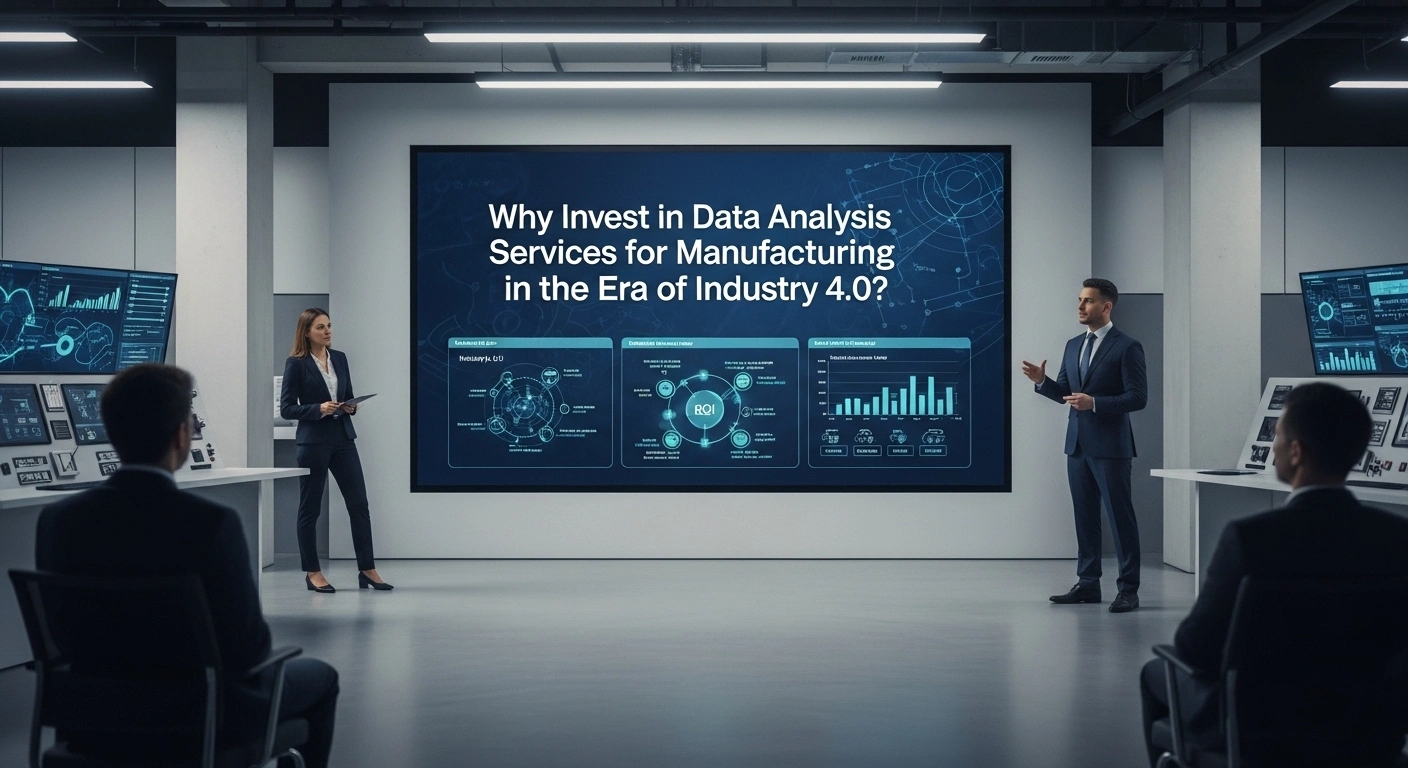
Why Invest in Data Analysis Services for Manufacturing in the Era of Industry 4.0?
Embracing Industry 4.0 compels manufacturers to rethink how production systems generate and use information, which positions Data Analysis Services for manufacturing as a strategic investment rather than a technical add-on. Recognizing that connected machines, smart sensors, and integrated platforms continuously generate high-volume operational data, organizations increasingly rely on structured analytics frameworks to convert raw inputs into measurable efficiency gains. Furthermore, linking operational data with financial and supply chain metrics strengthens enterprise-wide visibility, which supports informed decision-making aligned with profitability objectives.
Integrating advanced analytics into production environments enhances predictive maintenance capabilities and reduces unexpected downtime that erodes margins and disrupts delivery commitments. Leveraging machine learning models to anticipate equipment failures simultaneously extends asset life and stabilizes throughput while improving resource allocation across facilities. In addition, applying real-time analytics to monitor quality deviations enables faster corrective action, thereby reducing scrap rates and protecting brand reputation in competitive markets.
Aligning data strategies with broader digital transformation goals strengthens operational resilience and reinforces long-term competitiveness. Connecting Data Analysis Services for manufacturing with enterprise planning systems allows leadership teams to evaluate performance scenarios, optimize cost structures, and prioritize investments based on evidence rather than assumptions. Consequently, sustained analytics adoption fosters a culture of continuous improvement in which measurable productivity gains and margin expansion become achievable outcomes of disciplined data utilization.
Digital Transformation Strategies Powered by Manufacturing Data
Advancing digital transformation in manufacturing depends on the structured use of production and enterprise data, which places Data Analysis Services for manufacturing at the center of modernization initiatives. Establishing unified data architectures that consolidate information from shop-floor systems, enterprise resource planning platforms, and supply chain applications creates a reliable analytical foundation for strategic insight. Moreover, harmonizing disparate datasets eliminates operational silos, thereby enabling cross-functional collaboration and synchronized performance management.
Expanding analytics capabilities across descriptive, predictive, and prescriptive domains strengthens operational planning and supports faster responses to fluctuating demand patterns. Embedding intelligent dashboards and automated alerts into daily workflows improves situational awareness while reducing reliance on manual reporting processes. In parallel, integrating cloud computing and Industrial Internet of Things technologies enhances scalability, which allows manufacturers to adapt digital capabilities as production complexity grows.
Connecting transformation roadmaps with measurable performance indicators ensures that digital investments generate tangible financial returns and reinforces stakeholder confidence. Leveraging Data Analysis Services for manufacturing to evaluate energy consumption, cycle times, and yield rates clarifies where process redesign delivers the greatest impact. Ultimately, aligning technology adoption with structured analytics accelerates innovation cycles, strengthens cost control, and supports sustainable growth in data-intensive industrial ecosystems.
Enhancing Operational Visibility with End-to-End Data Integration
Strengthening operational visibility requires comprehensive integration of data across production stages, which elevates Data Analysis Services for manufacturing as a unifying mechanism within complex industrial environments. Consolidating machine data, quality records, inventory levels, and logistics information into centralized platforms generates a coherent operational perspective. Consequently, decision-makers gain real-time transparency into performance conditions that influence efficiency and profitability.
Linking upstream supplier information with downstream distribution metrics enhances traceability and improves responsiveness to disruptions or demand shifts. Synchronizing production metrics with maintenance and workforce data clarifies interdependencies that affect throughput stability. In addition, enabling real-time dashboards and analytics-driven alerts reduces latency between issue detection and corrective action, thereby minimizing operational losses.
Embedding integrated analytics into routine management processes supports consistent performance evaluation and reinforces accountability across departments. Applying Data Analysis Services for manufacturing to identify bottlenecks, energy inefficiencies, and process variability strengthens operational discipline while reducing waste. As a result, end-to-end data integration fosters a transparent and agile manufacturing environment in which informed decisions directly contribute to sustained efficiency and margin improvement.
Risk Management and Compliance Through Data Analytics
Reinforcing risk management frameworks in manufacturing environments depends on systematic analytics, which highlights the value of Data Analysis Services for manufacturing in safeguarding operational continuity. Aggregating safety records, equipment performance data, and supply chain indicators allows organizations to detect emerging risk patterns before they escalate. Moreover, analyzing historical incident data alongside real-time operational metrics strengthens predictive risk modeling capabilities.
Monitoring regulatory requirements through automated data validation processes enhances compliance consistency and reduces exposure to financial penalties or reputational harm. Integrating compliance checkpoints into enterprise systems ensures that production activities align with evolving industry standards. In addition, applying anomaly detection algorithms to transactional and operational data supports early identification of irregularities that could signal fraud, process deviations, or safety hazards.
Aligning governance structures with analytics-driven reporting improves transparency and strengthens stakeholder trust across value chains. Leveraging Data Analysis Services for manufacturing to generate audit-ready documentation streamlines regulatory interactions while reducing administrative burden. Consequently, embedding analytics within risk and compliance strategies contributes to stable operations, cost control, and sustainable profitability in regulated industrial sectors.
Scaling Production with Data-Driven Capacity Planning
Optimizing production scale in dynamic markets requires analytical insight into resource utilization, which positions Data Analysis Services for manufacturing as a strategic enabler of intelligent capacity planning. Evaluating historical demand trends alongside real-time production metrics clarifies utilization patterns and idle time factors. Consequently, leadership teams can align workforce allocation, machine scheduling, and material procurement with forecasted requirements.
Incorporating predictive analytics into planning models strengthens scenario analysis and supports proactive adjustments to capacity constraints. Simulating alternative production schedules allows organizations to evaluate trade-offs between cost, speed, and quality outcomes. Furthermore, integrating supply chain data into capacity calculations enhances synchronization between inbound materials and outbound distribution commitments.
Balancing expansion initiatives with operational efficiency goals depends on continuous performance measurement, which reinforces the importance of Data Analysis Services for manufacturing in long-term scalability strategies. Applying analytics to evaluate throughput, downtime frequency, and yield optimization supports informed investment decisions in equipment or facility upgrades. As a result, data-driven capacity planning sustains growth trajectories while protecting margins and ensuring that increased production volumes translate into improved profitability.
Competitive Advantage Through Continuous Manufacturing Performance Analysis
Sustaining competitive advantage in manufacturing markets relies on disciplined performance evaluation, which elevates Data Analysis Services for manufacturing as a driver of continuous improvement. Tracking key indicators such as equipment effectiveness, cycle efficiency, and defect rates generates quantifiable benchmarks for operational excellence. Moreover, correlating these indicators with cost and revenue data clarifies how process refinements influence financial performance.
Embedding analytics into routine management reviews enhances organizational learning and supports iterative optimization of production workflows. Comparing performance across facilities or product lines highlights best practices that organizations can replicate enterprise-wide. In addition, integrating predictive insights into quality management systems reduces variability and strengthens consistency in output standards.
Aligning performance analytics with strategic objectives ensures that operational improvements translate into market differentiation and reinforce long-term resilience. Utilizing Data Analysis Services for manufacturing to anticipate shifts in customer demand and cost structures enables adaptive production strategies. Consequently, continuous performance analysis fosters agility, strengthens profitability, and secures sustainable advantage within increasingly data-driven industrial landscapes.
In an era defined by digital transformation and competitive pressure, manufacturers can no longer depend on fragmented systems or reactive decision-making. The strategic adoption of Data Analysis Services for Manufacturing enables organizations to unify production, maintenance, quality, supply chain, and financial data into a cohesive intelligence ecosystem. Through predictive insights, real-time performance monitoring, and continuous optimization, manufacturers reduce operational risk, control costs, and strengthen profit margins. Ultimately, embedding advanced analytics into everyday operations positions enterprises to achieve scalable efficiency, sustained profitability, and long-term competitive advantage in increasingly data-driven industrial markets.