Power BI Implementation Partner selection is one of the most consequential decisions in a modern analytics journey, as it shapes how effectively data is transformed into measurable business value. Choosing the right partner goes beyond evaluating technical capability alone; it requires assessing strategic alignment, governance maturity, scalability planning, and long-term collaboration potential. Organizations increasingly rely on Power BI not just for reporting, but for enterprise-wide performance management, forecasting, and data-driven decision-making. As a result, identifying a partner who can integrate architectural expertise with business intelligence strategy becomes essential. This article explores the critical criteria that define how to choose the right Power BI Implementation Partner and ensure sustainable analytical success.
Choosing Power BI Implementation Partner
The selection of a Power BI Implementation Partner is understood as a foundational analytics decision that influences how data-driven practices evolve across an organization, while being framed around long-term value rather than short-term delivery. This selection is shaped by organizational readiness, since leadership alignment, data maturity, and internal ownership directly affect how effectively a Power BI Implementation Partner operates within complex environments. The decision is connected to expectations around scalability, because early architectural and modeling choices determine whether reporting solutions expand efficiently or become constrained over time. The evaluation is carried out through the extent to which analytical objectives are translated into governance-aware architectures that balance flexibility with control. The selection process is positioned within broader transformation efforts, because analytics initiatives interact closely with people, processes, and decision structures rather than functioning independently.

The assessment is conducted through qualitative indicators such as communication clarity, stakeholder engagement, and transparency in delivery methodology, which collectively influence trust and collaboration. The evaluation is influenced by risk management capability, since security, compliance, and data privacy obligations vary across sectors and regions and require early integration. The overall outcome is reinforced by documentation quality and structured knowledge transfer, as sustainable results depend on reducing long-term dependency on external teams. The effectiveness of the engagement is associated with solution adoption, because user confidence increases when reporting logic remains consistent and explainable. The long-term value is shaped by post-implementation support models, since evolving business questions often require continuous refinement and optimization.
The selection approach is framed as a relationship-based evaluation rather than a transactional selection, emphasizing continuity and shared accountability. The partnership is connected to measurable business outcomes, because effective analytics collaborations demonstrate operational and strategic impact beyond visualization delivery. The engagement is aligned with strategic continuity, as a Power BI Implementation Partner often supports planning, forecasting, and performance management processes. The decision is reflective of organizational ambition, because partner selection influences the pace and direction of analytics maturity. The process is integral to selecting a Power BI Implementation Partner capable of aligning strategy, delivery, and governance to support long-term analytical success.
Experience with Power BI implementation projects across industries
Experience with Power BI implementation projects across industries is regarded as a strong indicator of adaptability, because exposure to multiple industries demonstrates how analytical requirements differ across operational, regulatory, and cultural environments. This experience is reflected in data-integration capability, since sectors rely on distinct systems, standards, and data volumes that affect modeling approaches. Industry exposure is shaped by domain familiarity, because understanding industry-specific terminology enables clearer communication with business stakeholders. Broad experience is associated with faster issue resolution, as experienced teams recognize recurring challenges early in the delivery lifecycle. Cross-industry knowledge is connected to solution relevance, because industry-aware designs align metrics with actual decision-making cycles.
This experience is evidenced through delivery patterns that demonstrate flexibility across project scales and complexity levels. Prior exposure to regulated environments influences delivery quality, where auditability, data lineage, and governance must be embedded from the outset. Experience across competitive markets is linked to commercial responsiveness, since such industries often require rapid iteration and robust self-service capabilities. Accumulated lessons learned reinforce delivery effectiveness, as cross-sector experience informs improved modeling standards and visualization practices. Stakeholder confidence is associated with this breadth of experience, because familiarity with industry norms reduces friction during implementation and adoption.
The value of experience is defined by the diversity of implementation contexts rather than by project volume alone. Broad exposure is connected to risk mitigation, as wider experience enables anticipation of data-quality, integration, and change-management issues. This background is aligned with scalability planning, because enterprise-wide deployments introduce challenges distinct from pilot initiatives. Such experience is integral to selecting a Power BI Implementation Partner capable of generalizing proven practices while accommodating industry-specific constraints. This capability is essential to choosing the right Power BI Implementation Partner, as cross-industry experience strengthens resilience, relevance, and long-term value.
Microsoft certifications and official Power BI partner credentials
Microsoft certifications and official Power BI partner credentials are viewed as formal validation of technical competence, because certifications confirm familiarity with Microsoft-recommended practices and platform standards. These credentials are linked to platform alignment, since certified professionals maintain awareness of feature updates, architectural guidance, and support boundaries. Certification status is associated with delivery consistency, as partner programs encourage standardized and repeatable methodologies. Credentialed expertise is relevant to solution stability, because certified teams typically rely on supported capabilities rather than fragile custom implementations. Organizational credibility is connected to these credentials, since they provide assurance to internal and external stakeholders.
Certification value is reflected in team composition, as organizational benefit increases when certification coverage spans analysts, engineers, and architects rather than a single role. This value is influenced by continuous learning requirements, because certification renewal promotes skills currency and technical rigor. Credentialed partnerships are related to ecosystem access, as official partners often receive early visibility into product direction and technical resources. Governance maturity is associated with certified status, since partner standards emphasize security, compliance, and operational resilience. Certification impact is balanced against demonstrated delivery outcomes, because credentials complement but do not replace practical experience.
Certification status is interpreted as a qualifying factor rather than a decisive criterion in isolation. This status is connected to risk reduction, as certified practices lower the likelihood of architectural and modeling errors. Credentialed approaches are aligned with scalability objectives, because certified architectures support enterprise growth and integration. Certification relevance is supportive of long-term analytics strategy when combined with advisory capability and contextual understanding. These credentials remain relevant to selecting a Power BI Implementation Partner whose qualifications reinforce trust while enabling sustainable analytical value.
Understanding of business intelligence strategy, not just tools
An understanding of business intelligence strategy beyond tools is recognized as a critical differentiator, because effective analytics initiatives require alignment between technology and decision-making objectives. This understanding is reflected in early-stage discovery activities, where strategic questions guide data modeling and visualization priorities. Strategic insight is connected to KPI governance, as disciplined metric definitions reduce ambiguity and misinterpretation. Insight credibility is associated with this strategic foundation, because consistent logic and definitions build organizational trust in analytics outputs. Strategic thinking is embedded in architectural planning, as long-term strategies anticipate data growth, integration, and evolving analytical needs.
This understanding is demonstrated through governance frameworks that define data ownership, quality standards, and lifecycle management. Strategic maturity is linked to adoption strategy, because analytical value emerges when insights are embedded into operational workflows. The effectiveness of this approach is shaped by enablement initiatives, as training programs support analytical literacy and self-service capability. Organizational change management is related to strategic BI, since increased data transparency influences behavior and accountability. Strategic effectiveness is reinforced by iterative refinement, as priorities evolve in response to market and operational conditions.
The depth of strategic understanding is indicative of whether a Power BI Implementation Partner functions as a tactical implementer or a strategic advisor. This capability is aligned with sustainable value creation, because strategic business intelligence prevents fragmented and redundant reporting. Executive engagement is connected to strategic BI, as leadership sponsorship anchors analytics initiatives within decision processes. Strategic alignment is central to choosing the right Power BI Implementation Partner, because it ensures that Power BI investments deliver consistent and enduring business insight. Long-term success is reflected in this alignment, as integrated strategy translates analytical capability into sustained organizational performance.
How a Power BI Implementation Partner Aligns with Your Business Goals
Strategic alignment represents a foundational principle in modern analytics initiatives by positioning a Power BI Implementation Partner as a long-term business ally rather than a purely technical vendor. Such alignment is demonstrated through a deep understanding of organizational vision that links executive priorities with measurable analytical outcomes. Organizational relevance is established by embedding strategic themes such as growth, profitability, and risk management into analytics frameworks so that reporting initiatives reflect broader corporate direction. Credibility is reinforced when a Power BI Implementation Partner aligns data initiatives with enterprise planning cycles while maintaining flexibility as priorities shift. Value creation is illustrated through the translation of abstract goals into quantifiable performance indicators that enable leadership teams to assess progress objectively. Stakeholder alignment highlights the importance of ensuring that analytics outputs resonate across departments. The Power BI Implementation Partner is positioned as a strategic enabler that supports informed decision-making at multiple organizational levels.

Strategic intent is reinforced through structured collaboration models that ensure analytics initiatives remain synchronized with evolving business needs. Organizational maturity is reflected when a Power BI Implementation Partner integrates governance, security, and compliance considerations into alignment activities to reduce long-term risk. Organizational cohesion is supported by balancing competing departmental objectives while maintaining a unified analytics vision. Foresight is demonstrated through continuous alignment reviews that adapt dashboards and metrics as mergers, market changes, or regulatory pressures arise. Trust is strengthened by maintaining transparency in how data supports strategic outcomes, which reinforces executive confidence. Sustainability is emphasized by aligning analytics roadmaps with long-term transformation goals that extend value beyond initial deployment.
Long-term alignment is sustained through measurable outcomes by linking analytics success directly to business performance. Effectiveness is validated when a Power BI Implementation Partner defines success metrics that mirror organizational KPIs and enable return-on-investment assessment. Adoption is encouraged by ensuring that insights remain timely, relevant, and actionable while remaining consistent with strategic narratives. Industry-aligned practices are reflected through alignment approaches tailored to organizational scale and maturity, which prevents reliance on generic implementations. Long-term value creation is reinforced by demonstrating that sustained business alignment determines whether analytics initiatives deliver enduring impact.
Requirements gathering and Power BI solution design
Requirements gathering establishes a critical success factor by highlighting the analytical discipline of a Power BI Implementation Partner. Analytical depth is demonstrated through the capture of explicit reporting needs alongside implicit decision-making behaviors that ensure solution design reflects real operational contexts. Discovery activities are structured through interviews, workshops, and data assessments to create a comprehensive view of analytical demand. Alignment between business questions and data availability is achieved while maintaining traceability between requirements and technical design. Professional rigor is reflected when documentation connects stakeholder objectives to data models and report structures in a way that reduces ambiguity during development.
Solution design is built on validated requirements to ensure architectural coherence and scalability. Future growth is supported by designing semantic models that accommodate new data sources while minimizing rework as analytics maturity increases. Governance and security considerations are integrated early while accessibility is balanced with control. Consultative value is demonstrated when a Power BI Implementation Partner prioritizes requirements based on strategic impact rather than individual preference to maximize business relevance. Design decisions are connected to visualization strategies so that reports support analytical workflows rather than static consumption.
Requirements refinement occurs through iterative validation that allows evolving needs without destabilizing the solution. Stakeholder confidence is encouraged by validating assumptions before implementation and reducing rework. Cross-functional understanding is reflected by bridging business and IT perspectives while maintaining analytical neutrality. Analytics effectiveness is reinforced by emphasizing disciplined requirements gathering and solution design as determinants of long-term success with a Power BI Implementation Partner.
Customization and scalability of Power BI dashboards
Customization represents an expression of organizational identity by emphasizing the adaptability of a Power BI Implementation Partner. Dashboard alignment with corporate branding and information hierarchies ensures visual consistency. Diverse user roles are supported by tailoring views to executive, managerial, and operational needs while maintaining a coherent data narrative. Usability is enhanced by aligning layouts with decision-making patterns that improve insight consumption. Practical value is demonstrated when customization enhances clarity rather than aesthetic complexity, which supports faster interpretation.
Scalability is enabled through robust architectural design that allows dashboards to evolve with business growth. Expansion across regions or product lines is supported through modular data models and reusable components. Performance is maintained through optimization techniques while interactivity is preserved as complexity increases. Future requirements are anticipated by designing flexible structures that reduce long-term technical debt. Strategic foresight is reflected when a Power BI Implementation Partner aligns scalability planning with organizational growth strategies.
Dashboard relevance is sustained through lifecycle management that supports continuous enhancement. Self-service analytics adoption is encouraged by designing intuitive interactions that reduce dependency on central teams. Extensibility options such as embedded analytics are integrated while governance standards are maintained. Analytics longevity is reinforced by demonstrating that customization and scalability directly influence the long-term effectiveness delivered by a Power BI Implementation Partner.
Ability to translate business KPIs into actionable Power BI reports
Analytical effectiveness is demonstrated through accurate KPI translation that underscores the consultative role of a Power BI Implementation Partner. Metrics are aligned with strategic objectives so that KPIs communicate intent rather than isolated values. Actionability is enhanced by contextualizing KPIs with trends and thresholds while avoiding unnecessary complexity. Decision pathways are clarified by connecting metrics in ways that enable users to understand operational implications. Business fluency is reflected when KPIs align with operational realities and increase stakeholder trust.
Insight delivery is strengthened through consistent KPI definitions that reduce interpretive ambiguity. Calculation accuracy is validated against source systems to reinforce data integrity. Narrative elements are integrated to explain performance drivers while maintaining an objective reporting tone. Analytical exploration is enabled through drill-through capabilities that support root-cause analysis. Governance maturity is illustrated when a Power BI Implementation Partner aligns KPI frameworks with established standards.
KPI relevance is sustained by adapting metrics as strategies evolve to maintain long-term usefulness. Accountability is encouraged by aligning KPIs with ownership structures that clarify responsibility. Collaborative expertise is reflected through alignment around success measurement while remaining data-driven. Decision effectiveness is reinforced by demonstrating that the ability of a Power BI Implementation Partner to translate KPIs into actionable reports determines whether analytics drives meaningful business outcomes.
Evaluating the Technical Expertise of a Power BI Implementation Partner
Evaluating the technical expertise of a Power BI Implementation Partner involves an integrated assessment of analytical capability, architectural proficiency, and delivery maturity in relation to enterprise reporting objectives. An examination of experience across multiple industries demonstrates how a Power BI Implementation Partner adapts technical patterns to regulatory requirements, operational complexity, and varying levels of data maturity. A review of solution complexity across prior engagements indicates the ability of a Power BI Implementation Partner to manage large-scale data models, diverse stakeholder needs, and evolving requirements while limiting technical debt. Familiarity with the broader Microsoft Power BI ecosystem reflects how platform updates, service constraints, and roadmap considerations are incorporated into solution design. Alignment between analytical requirements and governed yet flexible architectures illustrates the depth of technical understanding applied by a Power BI Implementation Partner. Consistency between these capabilities and long-term business intelligence goals supports sustainable analytics outcomes rather than isolated reporting solutions.
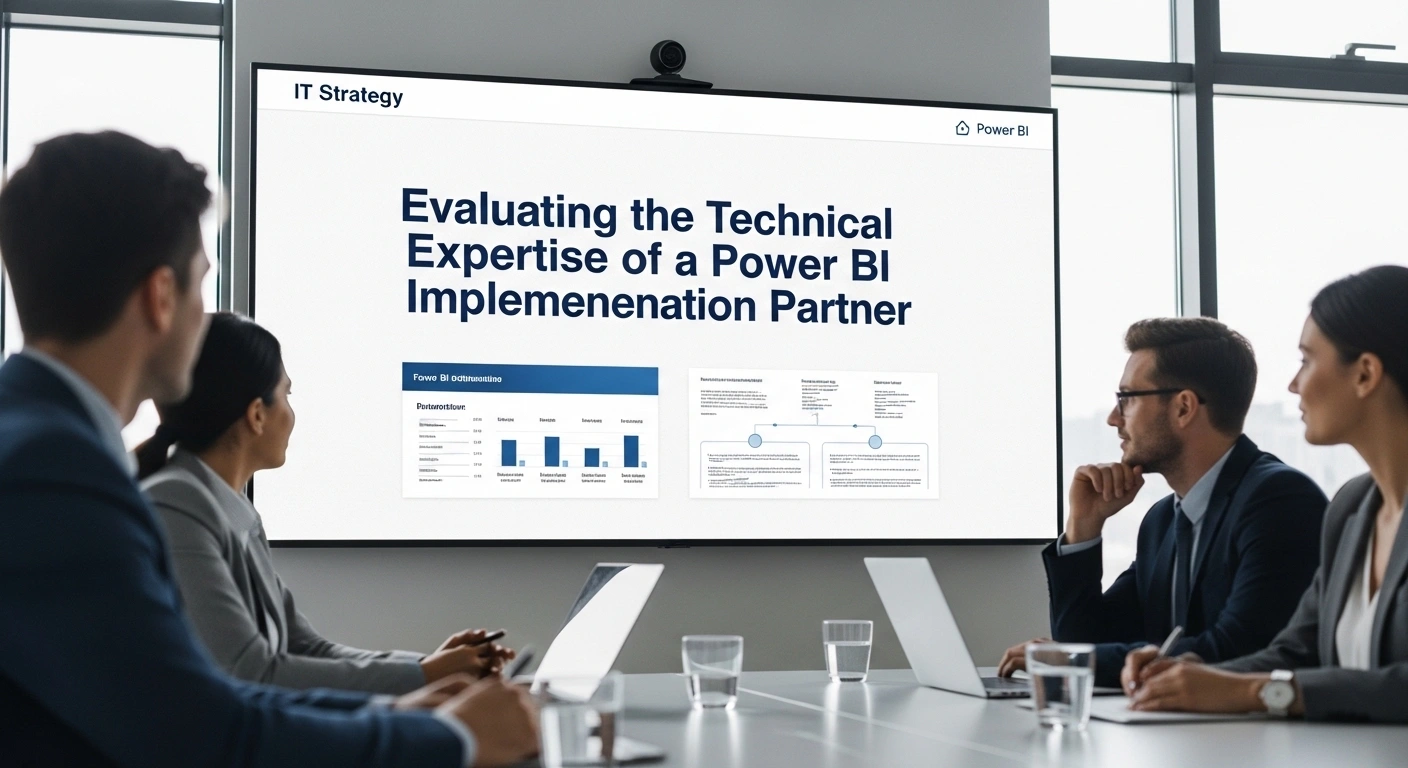
Delivery methodologies provide further insight into how a Power BI Implementation Partner operationalizes technical expertise throughout implementation lifecycles. Development standards and version control practices indicate how consistency, traceability, and reliability are maintained across environments. Testing and validation processes demonstrate how data accuracy, functional correctness, and analytical integrity are ensured prior to deployment. Documentation quality reflects the clarity with which data models, measures, and refresh logic are communicated for ongoing maintenance and knowledge transfer. Collaboration among data engineers, analysts, and business stakeholders illustrates how a Power BI Implementation Partner aligns technical execution with strategic objectives. The presence of disciplined execution practices indicates readiness for enterprise-scale analytics implementations.
Governance and operational readiness offer an additional perspective on technical maturity. Workspace strategies and deployment pipelines reveal how a Power BI Implementation Partner manages controlled promotion across development, testing, and production environments. Monitoring and support models illustrate how performance stability and solution reliability are sustained after deployment. Change management practices show how evolving business requirements are incorporated without disrupting established analytical assets. Alignment between governance structures and organizational policies demonstrates consistency with enterprise standards. Integration of architectural, operational, and governance considerations supports informed selection of a Power BI Implementation Partner capable of delivering durable analytics platforms.
Power BI data modeling and DAX expertise
Power BI data modeling and DAX expertise are reflected in the way analytical structures are designed to accurately represent business processes. Dimensional modeling practices indicate how a Power BI Implementation Partner ensures clarity, scalability, and efficient query performance through appropriate schema design. Optimization of fact and dimension relationships demonstrates alignment with analytical workloads and reporting needs. Management of historical data highlights the handling of slowly changing dimensions and time-dependent business logic. Embedding business definitions within the semantic layer enables consistent interpretation of metrics across reports. Alignment between model design and user accessibility supports both governed analytics and self-service consumption.
DAX capabilities provide insight into analytical sophistication and calculation reliability. Measure design practices demonstrate effective use of filter context, row context, and evaluation order. Application of variables and reusable calculation patterns shows how complexity is controlled while improving readability and maintainability. Optimization techniques reduce performance overhead caused by inefficient expressions and excessive recalculation. Accurate implementation of time intelligence functions supports period comparisons, trend analysis, and forecasting requirements. Rigorous validation of DAX logic ensures numerical consistency across diverse analytical scenarios.
Integration of modeling and DAX expertise into solution architecture strengthens overall analytical quality. Use of composite models and hybrid storage modes demonstrates adaptability to varying data volumes, latency requirements, and source system constraints. Collaboration with business stakeholders ensures that analytical logic reflects operational definitions and decision-making needs. Documentation of measures, relationships, and assumptions supports long-term maintainability and governance. Consistent modeling standards reflect technical maturity within a Power BI Implementation Partner. Strong data modeling and DAX expertise enable analytical solutions that remain accurate, performant, and aligned with organizational objectives.
Integration with existing data sources and systems
Integration with existing data sources and systems determines how effectively analytics reflect operational realities. Connector knowledge demonstrates how a Power BI Implementation Partner accesses relational databases, cloud platforms, and third-party applications. Data refresh strategies illustrate how reporting timeliness, system load, and latency constraints are balanced. Transformation logic applied during ingestion shows how data quality, consistency, and standardization are maintained across heterogeneous sources. Metadata alignment supports semantic consistency across datasets and reports. Effective integration ensures that analytical outputs accurately represent enterprise data environments.
Architectural alignment provides additional insight into integration maturity. Coordination with data warehouses, lakehouses, and enterprise data platforms illustrates how Power BI solutions fit within broader data architectures. Gateway configuration practices demonstrate readiness for hybrid and on-premises environments. Dependency management approaches indicate how upstream changes and refresh failures are identified and mitigated. Collaboration with data engineering teams reduces duplicated logic and fragmented transformations. Strong architectural alignment supports scalable and maintainable analytics ecosystems.
Operational and governance considerations complete the integration assessment. Security and authentication handling clarifies how access is managed consistently across connected systems. Documentation practices provide transparency into data lineage, refresh dependencies, and transformation logic. Adaptability to source system changes demonstrates resilience over time. Proactive monitoring practices reflect technical maturity within a Power BI Implementation Partner. Robust integration capabilities ensure that analytics remain reliable, timely, and aligned with evolving enterprise systems.
Performance optimization and Power BI security best practices
Performance optimization practices determine how analytical responsiveness is maintained at scale. Model size management techniques reduce memory consumption and improve query efficiency. Aggregation strategies and partitioning approaches support performance when working with large datasets and high user concurrency. DAX optimization practices improve calculation efficiency and interactive responsiveness. Monitoring of usage patterns enables ongoing tuning as adoption increases. Effective performance optimization ensures that analytics remain responsive under growing demand.
Security best practices establish trust in analytical solutions. Role-based access models demonstrate how sensitive information is protected according to organizational policies. Implementation of row-level and object-level security enforces granular data access controls. Alignment with enterprise identity providers supports secure authentication and authorization. Tenant-level and workspace governance practices mitigate access risks and unauthorized exposure. Strong security practices reflect technical maturity within a Power BI Implementation Partner.
Integration of performance and security considerations supports sustainable analytics delivery. Auditing and logging practices enable tracking of access patterns and usage behavior. Compliance alignment demonstrates readiness for regulated and controlled environments. Governance frameworks balance self-service analytics enablement with oversight and risk management. Continuous optimization efforts indicate long-term commitment from a Power BI Implementation Partner. Balanced performance and security practices ensure that analytics remain efficient, compliant, and trusted across the organization.
Is Your Power BI Implementation Partner Right for Long-Term Success?
Long-term success with analytics initiatives depends on strategic alignment, delivery consistency, and the ability to evolve alongside changing business needs, because sustainable outcomes extend beyond initial deployment activities. Strong alignment between governance maturity, architectural foresight, and cross-functional collaboration supports a more holistic evaluation of partner suitability. A balance between technical depth and business fluency within a Power BI Implementation Partner supports informed decision-making throughout the lifecycle of analytics programs.
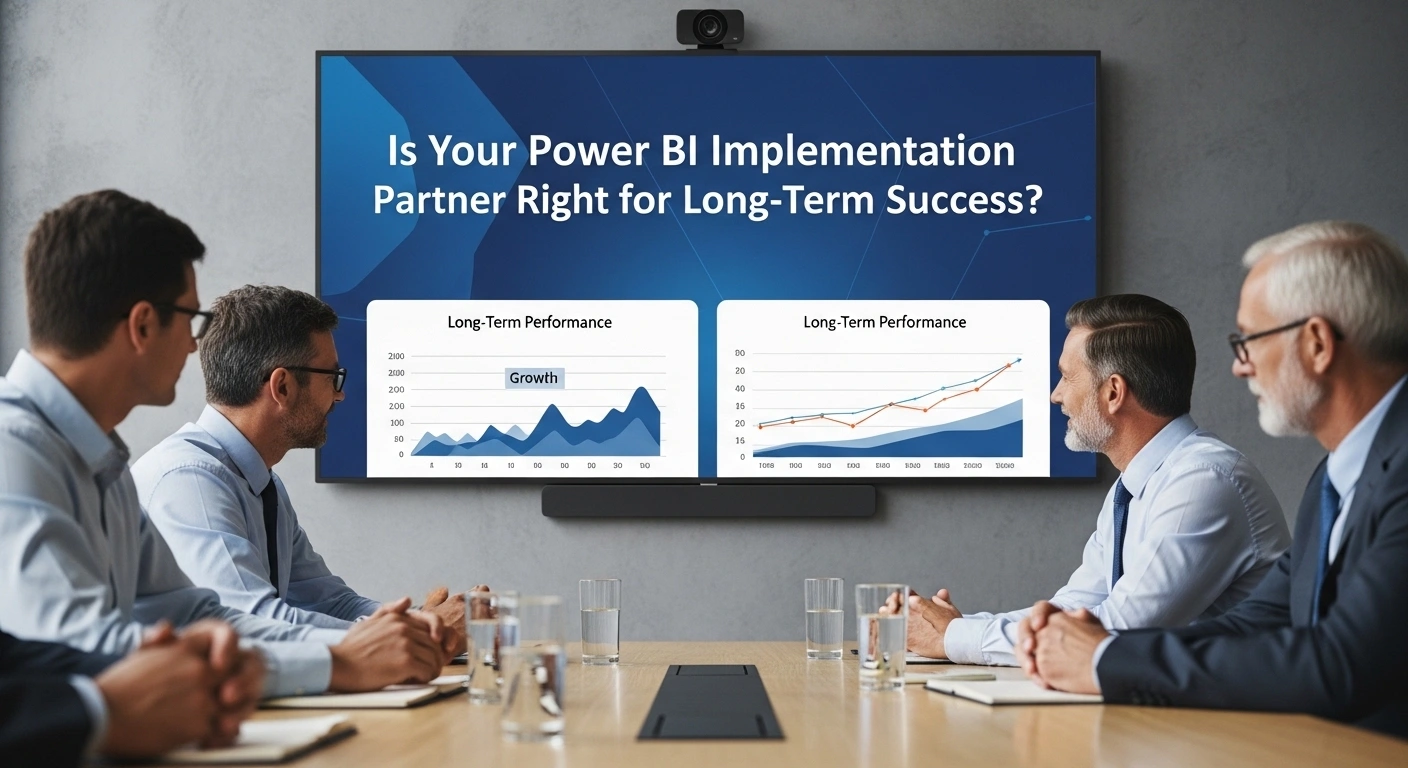
An assessment of credibility through certifications, portfolio depth, and industry experience reveals indicators of long-term reliability, while alignment with the Microsoft ecosystem supports ongoing platform relevance. Clearly defined methodologies addressing scalability, security, and data integration demonstrate preparedness for organizational growth and increasing data complexity. Engagement models that emphasize stakeholder collaboration reflect the capacity to maintain effective working relationships as priorities evolve.
Client references, retention patterns, and roadmap transparency provide insight into the consistent delivery of enduring value over time. Cultural compatibility and effective communication practices reinforce long-term collaboration beyond technical execution. Sustained success emerges when a Power BI Implementation Partner aligns analytics strategy with evolving organizational objectives.
Post-implementation support and Power BI maintenance services
Comprehensive post-implementation support represents a foundational requirement for long-term analytics success, because operational environments require continuous care after system launch. Power BI maintenance services contribute to performance stability, data accuracy, and compliance with security requirements across the analytics landscape. The extension of the Power BI Implementation Partner’s role into operational continuity frames support as a strategic capability rather than a reactive service.
Ongoing monitoring, issue resolution, and enhancement management sustain user confidence and platform reliability over time. The ability to adapt to evolving data sources, refresh schedules, and performance constraints supports uninterrupted insight delivery. Service models defined by clear expectations and accountability mechanisms reflect organizational and technical maturity.
The integration of maintenance services with governance oversight and proactive improvement cycles strengthens resilience as analytics environments expand. Transparent communication and measurable outcomes reinforce trust across stakeholder groups. Sustained engagement through responsive support highlights the long-term value contribution of a Power BI Implementation Partner.
Training, documentation, and user adoption strategies
Structured training and adoption strategies support the long-term effectiveness of analytics investments, because user capability directly influences value realization. Differentiated learning experiences aligned with distinct user roles improve alignment between Power BI usage and decision-making responsibilities. Clearly defined documentation standards preserve institutional knowledge and reduce long-term reliance on external expertise.
Role-based training programs enhance confidence in report consumption, self-service analytics, and data interpretation. Accessible documentation supports onboarding efficiency and reinforces knowledge retention across teams. Consistent usage patterns encouraged through enablement efforts promote broader adoption throughout the organization.
The measurement of adoption metrics and user feedback supports continuous refinement of training and enablement initiatives. The development of a data-driven culture through education positions analytics as a shared organizational capability. A sustained commitment to user empowerment reflects the long-term orientation of a Power BI Implementation Partner.
Ongoing optimization and Power BI roadmap planning
Sustained analytics value requires ongoing optimization and structured roadmap planning, because business priorities and technology capabilities continuously evolve. Periodic reassessment of Power BI environments supports proactive performance and relevance improvements. Clear alignment between optimization initiatives and strategic objectives maintains analytical consistency over time.
Continuous refinement of dashboards, data models, and performance configurations preserves usability and analytical accuracy. The integration of new Power BI features and complementary technologies supports innovation while maintaining operational stability. Balanced consideration of incremental enhancements and long-term initiatives contributes to platform longevity.
Collaborative roadmap planning enables organizations to anticipate future capabilities and investment requirements. Regular strategic reviews enhance transparency and shared ownership between stakeholders and the Power BI Implementation Partner. Forward-looking partnership behavior supports sustained analytical impact and long-term organizational value.
Selecting the right partner for Power BI is ultimately a strategic investment in long-term analytical maturity. Technical expertise in data modeling, DAX, integration, performance optimization, and security must be balanced with business fluency, governance awareness, and a commitment to ongoing optimization. Experience, certifications, structured methodologies, and post-implementation support all contribute to sustainable outcomes, but their true value emerges when aligned with organizational goals and evolving priorities. A Power BI Implementation Partner who combines strategic insight with disciplined execution can transform Power BI from a reporting tool into a scalable, enterprise-wide decision platform. Careful evaluation ensures that your chosen Power BI Implementation Partner supports not only immediate delivery needs, but also enduring business performance and growth.